Americans may have lost out on $19 billion in financial relief due to Trump admin's decision

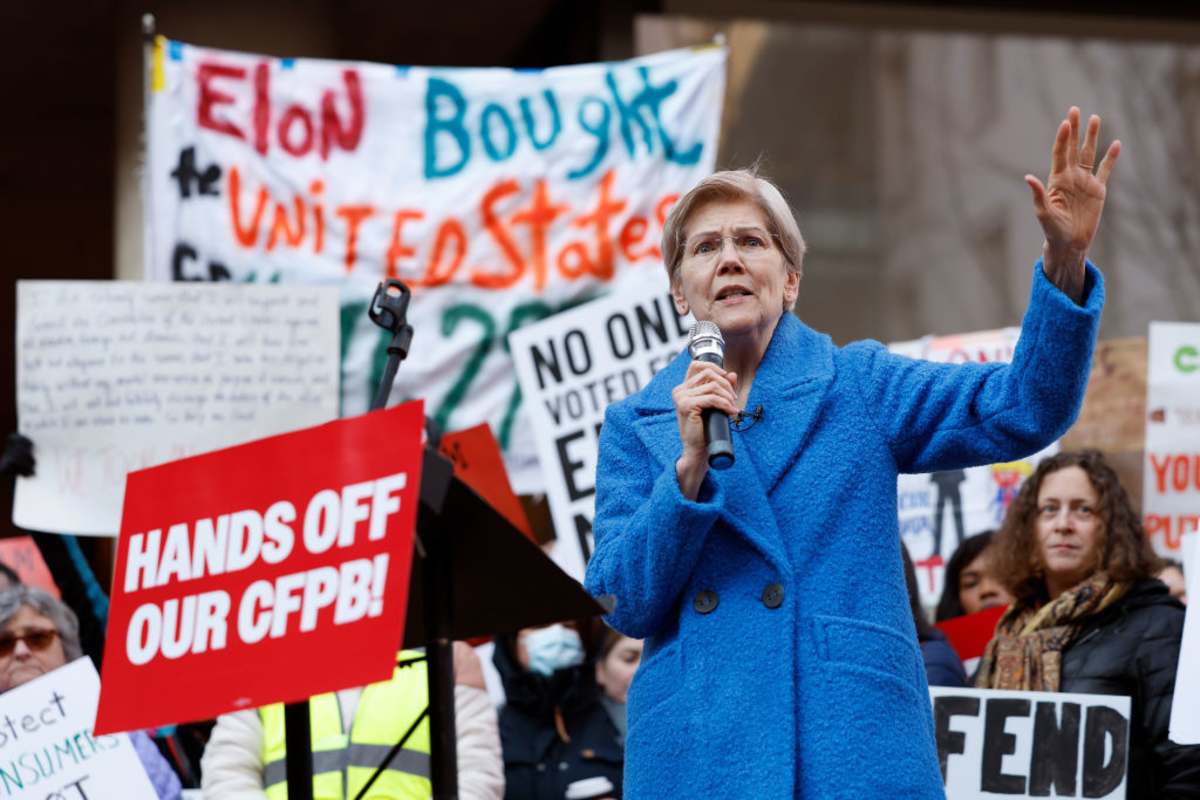
A new report from the Senate Committee on Banking, Housing, and Urban Affairs has raised concerns over the changes that the Trump administration made to the Consumer Financial Protection Bureau in its first year. Senator Elizabeth Warren and the authors of the report estimated that the fundamental changes forced the consumer watchdog to retreat from enforcement and regulatory work, which has cost Americans at least $19 billion in financial relief. The report argues that the CFPB abandoned major consumer protections, stalled investigations, and dismissed several lawsuits that were due to provide relief.

The Trump administration assumed control of the CFPB in February 2025 following the resignation of Rohit Chopra, the bureau’s director under President Joe Biden. White House budget director Russell Vought then took charge as the acting director, and following the change of command, a few new investigations were opened, but according to the Associated Press, many employees were ordered not to work, and several pending enforcement actions against financial companies were dropped.
The report lays out how Vought methodically began shutting down the agency by trying to fire staff and starve it of resources. It finds that critical rules were dismissed, over forty enforcement actions, settlements, and consent orders were undone. The authors argue that bad actors profited from the actions, and the consumers were denied relief, as per the report.

Back in April, the White House announced that it wanted to reduce the Bureau’s staff from 1,689 positions to 207 positions, but courts have blocked the move. However, the case won by the employees' union won't make a big difference, as Congress has already cut the bureau's budget by roughly half under Trump's One Big Beautiful Bill Act. In addition, Vought has systematically reversed and undone the work of the CFPB as well.

The administration dismissed at least 22 enforcement actions that cost $3.5 billion in potential restitution that would have gone straight to consumers' bank accounts. As per AP, the number includes only enforcement actions with decided monetary amounts that the administration dropped against financial institutions and giant corporations. Another form of relief that was denied was the limit on overdraft fees and credit card late fees, which the Biden administration finalized in 2024. The rule, which capped the amount that consumers needed to pay credit card companies, would have saved consumers roughly $10 billion, as per the report, but was blocked by a federal court last year, and the CFPB under the Trump administration decided not to pursue a suit against the block.

“Donald Trump promised to lower costs for Americans on 'Day One.' Instead, he is trying to shut down an agency that protects Americans from getting scammed out of their money by big banks and giant corporations,” Warren, a ranking member of the Senate committee, wrote in the report. “As a result, Trump’s attempt to sideline the CFPB has cost families billions of dollars over the last year alone. We're going to keep fighting for the CFPB and against the billionaires who want to get rid of it," she added.

Furthermore, the report claims the administration reduced, dropped, or failed to distribute payments from 23 settlements or consent orders against companies that cost consumers up to $225 million in relief. Americans lost out on another $4 billion in relief from a series of lawsuits and settlements that were directly dismissed by Vought, as per the report. Additionally, the CFPB had to shut down its Consumer Complaint Program, where a consumer could file a complaint against any wrongdoing by their bank or financial services. This move cost another $40 million in direct consumer relief, the report claimed.
More on Market Realist:
Trump promised big savings for Americans with his latest move — but experts have a major concern
Trump makes a major stock market prediction — insists he is ‘right about everything’
Trump keeps declaring victory over inflation in his speeches — but the data says otherwise