Fact check: Trump claims gas prices are at $1.85 per gallon — but the data says otherwise

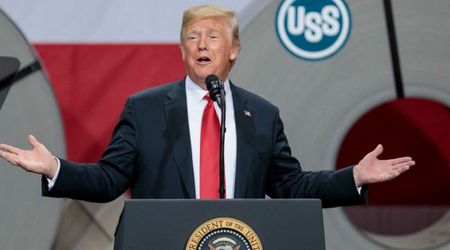
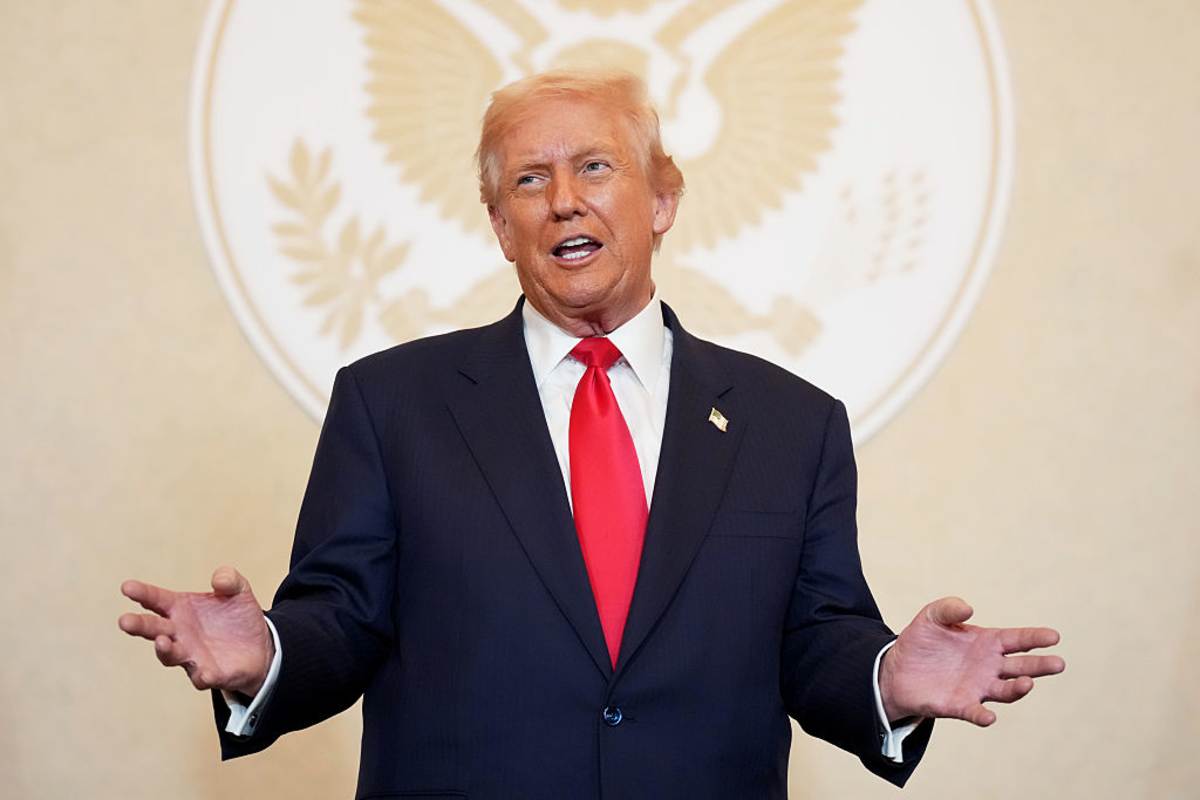
In his record-length State of the Union address, President Donald Trump made several bold claims, one of which was related to gas prices and was a little exaggerated. Trump on Tuesday claimed that gas prices are below $2.30 in the majority of the states, and in some, the price was below $1.99. While one of the claims was completely factually incorrect, the other was only partially correct, but neither the president nor his policies had to do anything with it, according to the head of petroleum analysis at GasBuddy, Patrick De Haan.

In his speech, the president said gas prices "reached a peak of over $6 a gallon in some states under his predecessor, Joe Biden, calling it 'a disaster,' Forbes reported. He then went on to say, "It [gas] is now below $2.30 a gallon in most states. And in some places, $1.99 a gallon." The claim that seems too good to be true actually is, as the national average for a gallon of gas reached $2.98 on Thursday, according to data from the AAA. The lowest average price was recorded in Oklahoma, where it was at $2.43 per gallon, far from Trump's $1.99 claim.
However, in his Substack post, analyst De Haan noted that the second claim was partially correct as “only 8 out of roughly 150,000 gas stations nationwide are selling gasoline below $2 per gallon.” In his essay titled “The Real State of Fuel Prices,” De Haan noted that while the average price was 16 cents lower than a year before, it was close to $3, and not $2.30. Furthermore, while the president claimed the prices in Iowa reached as low as $1.85, far from the actual average, De Haan clarified that the prices did reach $1.85 briefly last month, but due to "localized price wars and not structural shifts.” De Haan described it as "highly localized competitive events" in which stations operated at razor-thin margins and, in some cases, sold at a loss to attract customers.

De Haan further told Forbes that prices have been on the rise lately as the EPA's routine transition to summer-blend gasoline, which is slightly more expensive, is required during the warmer months to reduce smog and harmful emissions. The analyst explained that the highest increase is seen on the West Coast, where the seasonal transition begins earlier, particularly in the eastern part of the Rockies. Furthermore, military tensions between the U.S. and Iran are adding to the pressure on the global crude oil market. De Haan told the publication that the situation could threaten to close or limit oil transport through the Strait of Hormuz, and “There's certainly market anxiety surrounding the geopolitical tensions that's pushed oil to that level."

Asked if the prices will continue to rise, De Haan said they will, “without a doubt.” He noted that the routine seasonal price increases could push prices up by 35 to 50 cents in the coming months, and as per GasBuddy’s 2026 fuel outlook, the national average for gas prices is expected to peak around April or May.
More on Market Realist:
Gas prices in America have hit a record low in 2025 — here's what to expect next year
Americans are seeing the lowest Thanksgiving gas prices since 2021 — but why now?
Trump is probably right about the US economy — but he's not seeing the big picture