Governor Newsom's regulations will further spike gas prices in California, warns Chevron

American multinational energy corporation, Chevron's top official has issued a dire warning to California's state regulators over an upcoming climate policy that could wreak havoc on the state's oil and gas industry, and the economy overall. On Wednesday, the corporation's President, Andy Walz, addressed Governor Gavin Newsom, cautioning that the amendments made to the state's Cap-and-Investment program, which are set to go up for a vote, will result in crippling job losses and skyrocketing gas prices. In the letter obtained by California Globe, Walz urged regulators to revise the provisions before they permanently damage the state's economy.
In the letter, Walz mentioned Newsom and the California Air Resources Board's (CARB) Cap-and-Invest program, which places strict progressive limits on greenhouse emissions each year. The carbon-cutting program mandates companies that are deemed by the CARB as polluters buy allowances per ton of carbon dioxide emitted, and each year, fewer allowances are created. The major polluters evidently are the state's biggest oil refineries. Recently, the CARB proposed that it is aiming to pull 118.3 million allowances out of the state's market between 2027 and 2030, increasing its carbon reduction target to 90% by 2045. The allowances are sold via quarterly auctions, and companies are required to bid and buy them or face closures.

Walz and Chevron argued that the program will have devastating effects on the state's economy and residents. “The proposed regulation will cripple the survivability of the state’s remaining refineries, which will result in California losing the entire industry to this misguided program," Walz wrote. The letter further explained that the regulation will increase transportation and aviation fuel prices for consumers and lead to significant job losses. "It will upend California’s fuels market and threaten critical energy and national security assets," the letter warned. It added that the oil and gas industry employs over 530,000 people across the Golden State alone and contributes roughly $64 billion each year in state, local, and federal tax revenues that fund essential public services like education, healthcare, and infrastructure development.

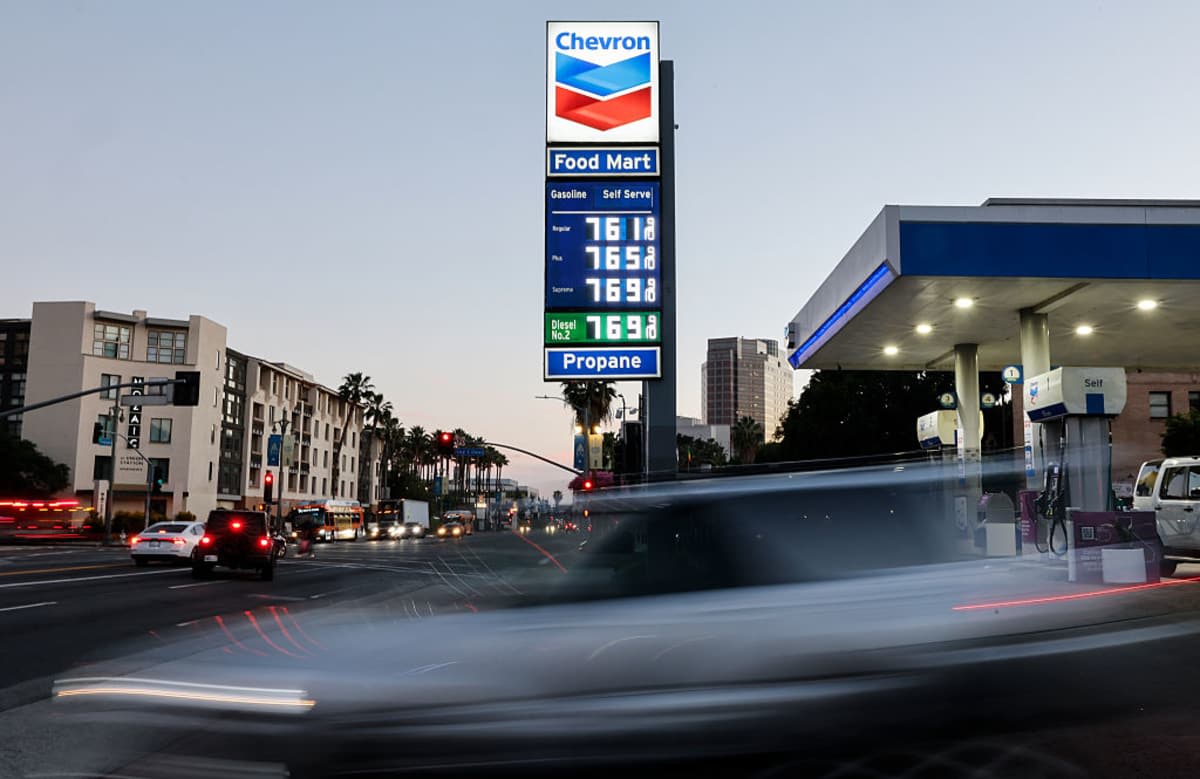
Walz further warned that the stringent regulations will force the closures of oil refineries, threatening the state's energy security and the end consumer. Gas prices in California are already the highest in the nation, with the current average price per gallon sitting at $5.078, significantly higher than the national average of $3.413, according to data from the American Automobile Association. Citing the California Energy Commission, Walz noted that the regulation already adds $0.24 to the cost of gas in the state. "These impacts will fall most heavily on lower-income households that spend a disproportionate share of income on transportation fuels, increasing costs without addressing the underlying driver of California’s gasoline prices," Walz said. He argued that affordability is a top concern for the state's residents, and these regulations will only exacerbate the high cost of living.
Walz further added that a threat to the state's remaining refineries is a threat to the nation's security as well. "Refinery closures in California reduce fuel supply resilience on the West Coast, increasing risks to military readiness and national security," Walz cautioned. He explained that a stable policy framework that supports California's refineries is vital to energy security and national defense.
Similar pilot schemes like that of CARB have faced stiff opposition in countries like Spain and Australia, according to the New York Post. However, Governor Newsom extended the program, which was set to expire in 2030, to be in effect until 2045 September. Critics have argued that the policy isn't aimed at reducing emissions, but it acts like a money-making operation for the state's officials. Furthermore, the CARB is reportedly exempt from standard open-meeting rules, which allows it to manage billions of dollars in carbon auctions behind closed doors. Since Valero's Benicia refinery closed down last month, Chevron argued that the state won't survive another refinery shutdown. “Chevron urges policymakers and regulators to reconsider and revise the proposed regulation before it causes lasting and irreversible harm to California’s economy and energy security and broader vital American interests,” Walz said in the letter.
More on Market Realist:
Trump casually says 'if they rise they rise' as gas prices surge amid the recent conflict
Fact check: Trump claims gas prices are at $1.85 per gallon — but the data says otherwise
Ex-Reagan adviser reveals what he thinks of Trump's energy policies: 'We've just seen the beginning'