
ADP chief economist warns the 'rosy picture' for US economy in 2026 may be hiding something grim
Nela Richardson, chief economist at ADP told Fortune, the granular data shows a shift in job trends.
Dec. 12 2025, Published 6:01 a.m. ET

While the year 2025 went through a lot of economic curveballs, including the trade war, tariffs, inflation, and job losses, a lot still seems to be stable, as per the latest data. While the stock market has remained elevated, inflation and unemployment have flattened; the outlook for 2026 is mostly positive. However, according to Nela Richardson, ADP's chief economist, the rosy picture doesn't show the reality at the granular level.

Speaking to Fortune, Richardson indicated that the cracks in the robust macroeconomic picture have already started to show up. During the longest government shutdown in U.S. history, the public payroll data wasn't published, and the void was largely filled by ADP, which shares private payroll data insights. “We’re tracking changes in real time—it’s as high-frequency as payroll data can get, and we have not seen this rosy picture for 2026 in the data. I think [when people] point to an improved labor market next year, they’re highlighting a couple of things in the macro economy, while we’re looking at this very granular dataset of private employment," Richardson told the publication.
Talking about the Fed's latest rate cut, she noted that the positive outlook mainly highlights a couple of further rate cuts, some tax advantages, some AI investment paying off, and certainly more clarity on the trade policy. “All fantastic attributes, but it takes longer for those to trickle to mom and pop," the economist suggested.

Pointing to the latest reporting from her company, she shared that U.S. private employment shrank by 32,000 roles last month, led by weakness from smaller businesses. She noted that companies with between one and 19 employees axed 46,000 roles, while firms with 20 to 49 workers cut 74,000 roles. On the other hand, companies with 500 or more workers added 39,000 roles. Pointing to the struggles faced by smaller firms, Richardson said, “Tiny firms are a big chunk of employment, but the tiny firms are making tiny moves, and they’re moving all in the same direction. It could be as small as not hiring two teenagers at the bakery or forgoing that delivery driver over a certain season, it doesn’t mean it’s a big, huge layoff, it’s not replacing a worker here or there, and those changes add up." Thus, noting the scale of these micro moves, the macro drivers are less likely to "influence" the outlook.
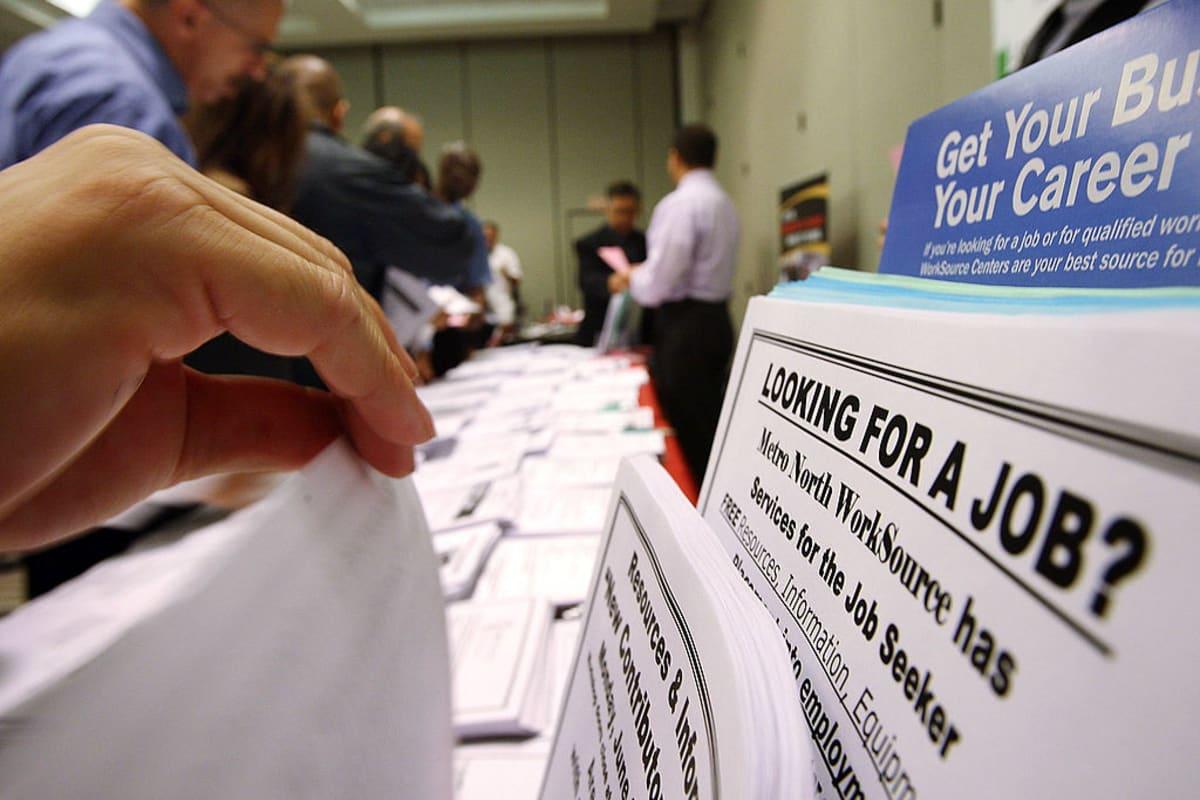
Richardson further pointed to the shift in the labor market for the younger generation. The economist explained that new entrants are facing "a different set of hoops" to jump through, making the picture for 2026 more complex. She added that with the great resignation and the rise of hybrid work, managers aren't constrained by geographical boundaries, which has expanded the hiring pool and increased competition. Thus, the goalposts for Gen Z are constantly moving, and the difference is seen from cohort to cohort, instead of one generation to another. “It’s your older brother and sister who graduated three or four years ago; it’s not even their job market anymore," she said.
More on Market Realist: