
NASA will pay you $3 million if you can help solve a simple issue for their Moon mission
The solution will not only be used for long-term lunar missions but will also help communities on Earth.
Oct. 24 2024, Updated 2:31 p.m. ET

NASA may be the top space agency in the world, but even the best need help at times, and it wasn't long ago that it turned to Elon Musk to rescue astronauts stuck in space. Now that the space race frontrunner is facing trouble dealing with trash in the cosmos, it has launched the LunaRecycle Challenge to find a solution.
This challenge is a two-phase competition, which is focused on the design and development of recycling solutions to reduce solid waste and improve the sustainability of long-term lunar missions, according to NASA. The space agency is also looking for physical hardware along with a digital twin or virtual replica of the designs. For Phase 1, NASA has provided a Mission Scenario for a hypothetical 365-day journey with technical requirements that should be addressed in their solutions.
“Operating sustainably is an important consideration for NASA as we make discoveries and conduct research both away from home and on Earth,” Amy Kaminski, program executive for NASA’s Prizes, Challenges, and Crowdsourcing program, said in a statement. “With this challenge, we are seeking the public’s innovative approaches to waste management on the Moon and aim to take lessons learned back to Earth for the benefit of all.”
Submissions for this phase need to be sent by March 31, 2025, and the winners will be declared sometime in May 2025. Then, for Phase 2, teams are required to build a functioning prototype of the winning design from Phase 1. Teams who may not participate in Phase 1 are also eligible to take part in this one.
If you are interested you can be registered through the Expression of Interest Form by March 31, 2025. Once a team has submitted its registration and supporting documents, the admin will review the forms and decide on a team leader. As per reports, for Phase 1, the best physical prototype will win $600,000 the best digital twin will win $400,000, and for Phase 2, the best functioning prototype will win $1.4 million, and the best digital twin will win $600,000.
"The Prototype Build Track focuses on designing and developing hardware components and systems for recycling one or more solid waste streams on the lunar surface," NASA explained before adding, "The Digital Twin Track focuses on designing a virtual replica of a complete system for recycling solid waste streams on the lunar surface and manufacturing end products."
NASA also hopes that this challenge will give birth to better approaches and outcomes for recycling back on Earth, whether that's through new ideas or by simply increasing efficiency. They are also looking for ways in which we can reduce outputs through small-scale technologies that communities can use around the globe.
According to the space agency, the designs must deal with all kinds of waste, such as food packaging, human waste, and other materials. The goal is mainly to come up with ideas to recycle and reuse as much waste as possible.
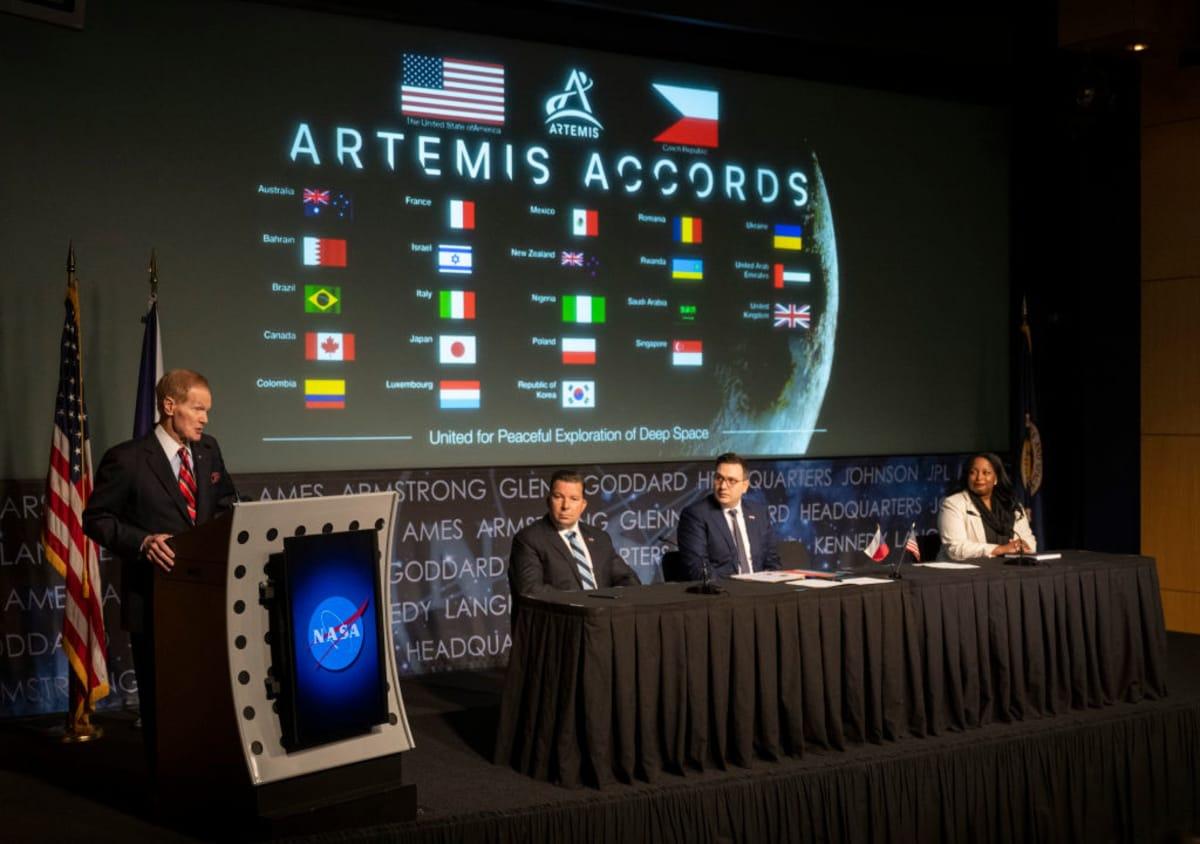
The Artemis program, led by NASA, is set to return humans to the moon with a focus on creating a long term presence on the moon. So, in order to make these missions successful, astronauts need to manage the resources they have and also minimize the waste.