
28-YO's Startup on Self-Driving Car Technology Made Him the Youngest Self-Made Billionaire
Today, Russell has a net worth of $1.6 billion with his Florida-based start-up Luminar having a market cap of $2.59 billion.
July 29 2023, Published 2:30 a.m. ET

Austin Russell is the world's youngest self-made billionaire at the age of 28, as per Forbes. His company Luminar competes with some of the major companies like Tesla. Russell was only 17 years old when he started his own self-driving company called Luminar Technologies which specializes in making Laser sensors that can help self-driving cars detect any object in their way. In an interview with CNBC Make It, he said that he "always wanted to know the hows and whys of how to build and create things."
Getting started on the billion-dollar company
"When I was in my early teens, I converted my parents’ garage into an optics and electronics lab...I saw opportunities to be able to build new kinds of optical systems from the ground up," revealed Russell. The company only took off when Austin decided to quit college and focus on his brainchild full-time. He even applied for a Thiel Fellowship which pays students $100,000 to focus on their startups full-time, which he won.
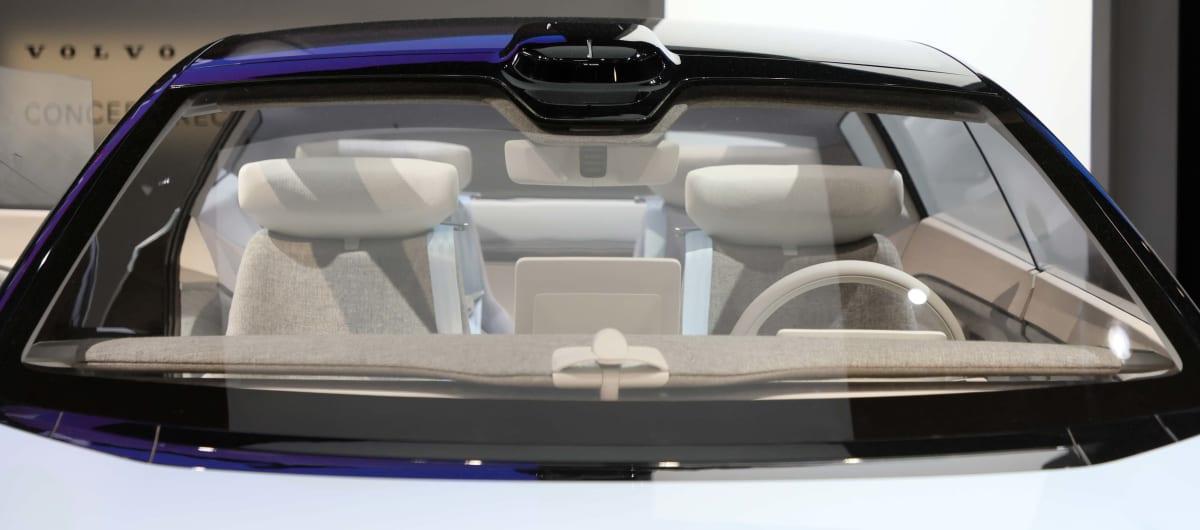
Today, Russell has a net worth of $1.6 billion with his Florida-based start-up having a market cap of $2.59 billion. The company reported a revenue of $40.7 million in 2022 and has partnerships with companies like Volvo and Mercedes-Benz.
How does Luminar's technology work?
The car uses laser-powered lidar technology which stands for 'Light Detection and Ranging' that helps to create a 3D map of the car in real-time. "It sends out laser pulses and we’re able to do this millions of times to be able to successfully measure exactly how far away everything is, down to centimeter-level precision," Russell says. This technology is very helpful in letting cards automatically reduce speed when in front of an unexpected object or pedestrian. However, the car is not designed to replace drivers altogether, as Russell mentions.
How is the technology different from Tesla?
Elon Musk's approach at Tesla is very different as compared to Austin Russell's. Tesla reportedly uses only cameras to detect any object in its path. According to Mario Herger who is an author and an AI expert, the cameras that are placed in Tesla can map up to 250 meters of range, which makes it easier to switch lanes automatically or even find you in a parking lot, as per the official website. However, the auto-pilot feature of the car has caused more than 736 car crashes and almost 17 fatal accidents in the U.S., as per The Washington Post.
Are self-driving cars the future?
According to Renub Research, a market research and consulting company, the U.S. autonomous vehicles market will grow into a $186 billion industry by 2030, up from $4 billion in 2021, per USA Today. The incorporation of sensors will help in times when the camera can't really see through light or darkness or fog or something along those lines. Another thing that these companies need to work on is reducing costs and increasing affordability.
The cost of the sensors that Luminar uses is between $500 and $1,000 apiece, which is quite expensive. Russell is hoping to bring those prices down with mass production. “When you commit to doing something, you have no option but to be able to get it to work out,” he says. “Failure is not an option. And I know it certainly won’t ever be for Luminar.”