
Woman Calls out Obsession With Microtrends in the Era of Fast Fashion With Viral Video
In the video, which has garnered over 90,000 views, Julia unveils a collection of trendy clothing items found in a secondhand store.
April 27 2024, Published 11:00 p.m. ET

Fast fashion is thriving at a time when e-commerce platforms are offering more choices and social media influencers are constantly introducing new trends. A viral TikTok video by thrifter Julia (@juliaa.vids) has ignited a conversation about the consequences of our obsession with clothing microtrends and the rampant consumption that accompanies it.
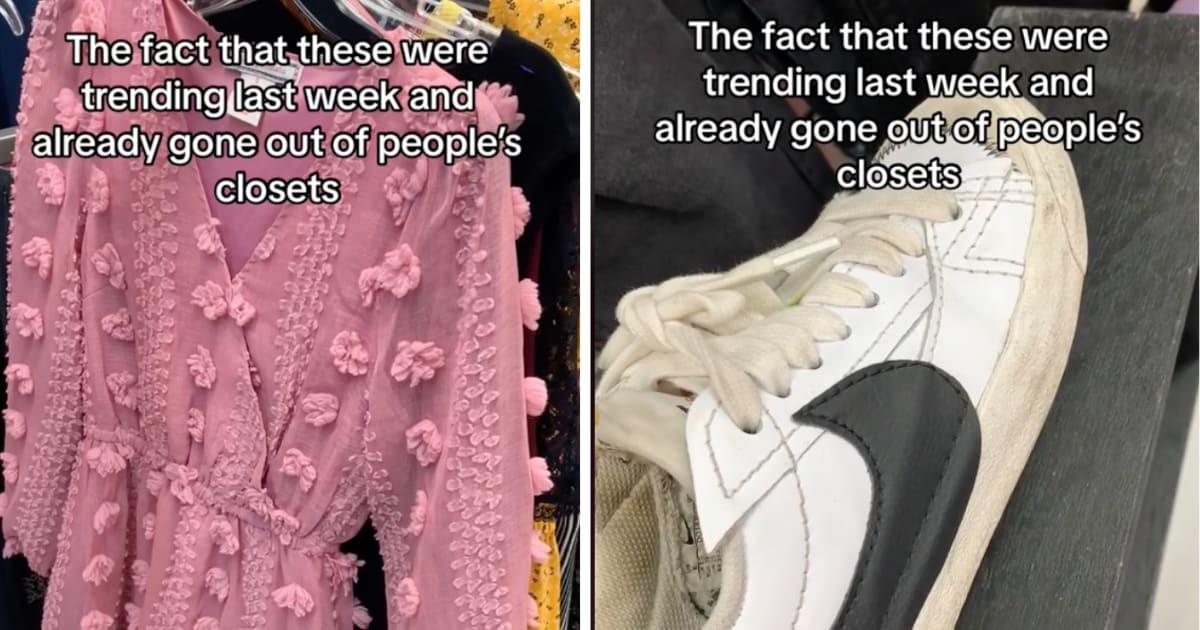
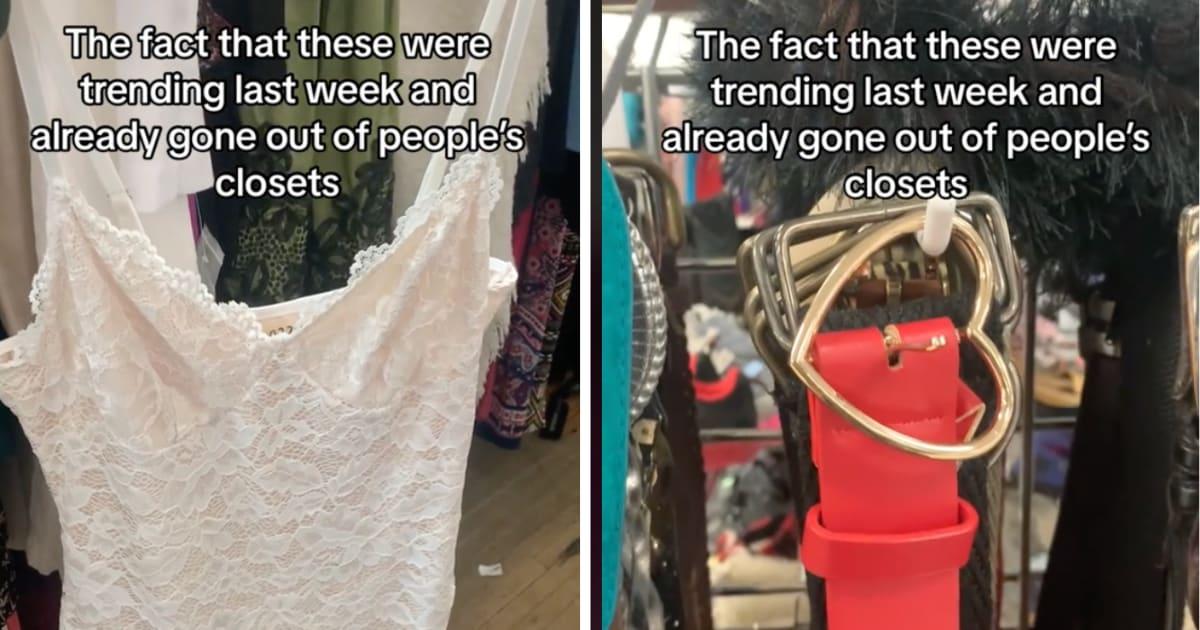
In the video, which has garnered over 90,000 views, Julia unveils a collection of trendy clothing items found in a secondhand store. From cocktail dresses to blouses and high heels, these pieces had apparently been "trending" just days before. Julia's dismay is evident as she questions the transient nature of fashion and the rapid turnover of clothing items in today's culture. "The fact that these were trending last week and already gone out of people's closet," laments Julia in the video's caption.

The TikTok video sparked a flurry of reactions from users, many of whom echoed Julia's concerns about the wastefulness of fast fashion. @nini user commented, "It's so sad how people treat clothing and microtrends as disposable." Another user @onica exclaimed, "THE DENIM DRESS OMG OMG," drawing attention to a specific standout piece. However, not all responses were filled with unbridled enthusiasm. Some, like user @t, took a more critical stance, "Besides the Versace shoes and denim dress, this stuff has been out of trend for 2 years minimum," they observed. Others, such as samsterhampster2 offered a more pragmatic perspective, suggesting that "the donated items might simply no longer fit their previous owners," to which @Chiibinlet added, "Someone appreciate them, please. Let my thrift stores have things like these." User @Jean offered a sage piece of advice: "This is why you should wear whatever you want instead of what's trending." User @Stella expressed a sentiment of complete adoration, declaring, "I would buy everything."
Characterized by companies rapidly churning out cheap, trendy garments to keep pace with ever-changing styles, fast fashion has encouraged a culture of overconsumption. The charm of keeping up with the latest trends has led consumers to buy more clothing than ever before, only to discard them once they fall out of fashion. This cycle of constant consumption not only contributes to overflowing landfills but also has significant environmental repercussions.

According to environmental experts, the fast-fashion industry is a major contributor to global carbon emissions, accounting for a staggering 10% of the world's total. The manufacturing processes involved in producing large volumes of clothing at breakneck speed emit harmful pollutants, further exacerbating climate change. While donating unwanted clothes to thrift stores may alleviate the burden on landfills, it does little to address the root cause of the problem.
As the conversation surrounding fast fashion gains momentum, consumers are urged to rethink their approach to clothing consumption. "Rather than succumbing to the pressure of constantly updating our wardrobes, we should focus on buying fewer, higher-quality items that stand the test of time," advises sustainability advocate Emma Green. "Investing in timeless pieces not only reduces our environmental footprint but also promotes a more thoughtful and intentional approach to dressing."
For more such content, you can follow @juliaa.vids on TikTok.