
Woman Debunks Hustle Culture Myth and Reveals Why a $200K Salary May Not Be What It Seems
The
Feb. 19 2024, Published 2:51 a.m. ET

In the realm of financial wisdom, we are accustomed to hearing about the diminishing value of cash due to inflation. However, TikToker Gabrielle Judge has taken this concept a step further, asserting that the same principle applies to our salaries. As an advocate for the "anti-work" movement, Judge contends that even a substantial $200,000 annual salary may not be as lucrative as it seems when analyzed through the lens of hourly wage and workload expectations. Today, we delve into Judge's perspective, examining the impact of work ethic on earnings and the assertion that the prevalent "hustle culture" may lead to financial setbacks, per Moneywise.
The hourly wage breakdown
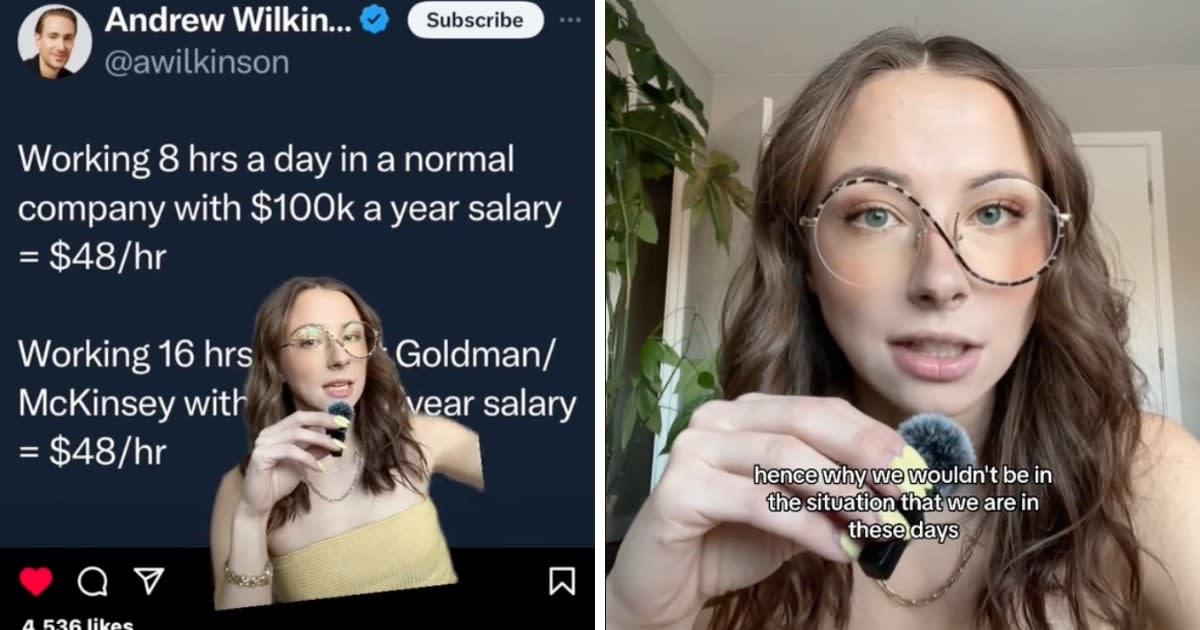
Gabrielle Judge, a self-proclaimed "anti-work girlboss," gained attention with her viral video, challenging the traditional notions of a high salary. According to Judge, the hourly wage remains consistent for individuals earning $200,000 a year, working 16-hour days, and those earning $100,000 a year, adhering to the standard eight-hour workday without overtime. Moneywise validated Judge's claim, revealing that both scenarios equate to an hourly wage of $52. This revelation prompts a reevaluation of the conventional belief that higher salaries directly correlate with increased hourly compensation.

The illusion of hustle culture
Judge's assertion that "hustle culture makes you broke" questions the prevailing narrative that working longer hours leads to financial success. While acknowledging that not everyone earns six-figure salaries, she contends that the common belief in working hard to secure promotions and higher pay is flawed. According to Judge, this approach merely results in working towards a salary that diminishes in value over time, highlighting a critical aspect known as the "productivity-pay gap."
Understanding the productivity-pay gap
The "productivity-pay gap" is a phenomenon explored by the Economic Policy Institute (EPI), emphasizing the disparity between economic growth (productivity) and workers' wages (pay). EPI's findings reveal a staggering gap in the United States with hourly pay increasing by 14.8% from 1979 to 2022 while productivity surged by an astonishing 64.7%—more than four times the increase in hourly pay. This discrepancy indicates that salaries have failed to keep pace with the nation's economic growth, leading to a devaluation of earnings over time.
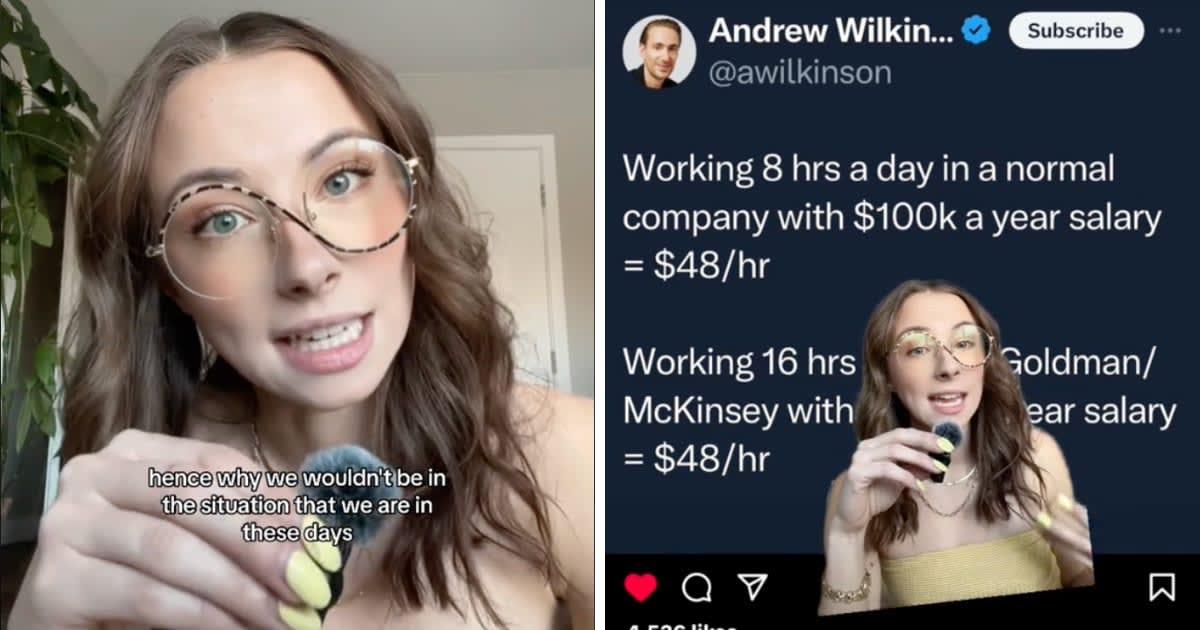
Judge's argument gains credence when considering the evolution of salaries in tandem with economic growth. In essence, the gap between productivity and wages accentuates the notion that salaries have not kept pace with the country's overall prosperity. This economic trend challenges the conventional wisdom that hard work and overtime hours translate to financial success, urging a reevaluation of traditional work practices.
Impact of hustle culture on individuals
Judge's message resonates with individuals across various income brackets as she emphasizes that the productivity-pay gap affects salaries at all levels. Regardless of one's current income, pursuing increased pay through relentless work may not yield the anticipated financial rewards. This introspective examination prompts individuals to reconsider their approach to work, challenging the entrenched hustle culture that may inadvertently lead to financial stagnation. In response to the video, one user, JJ Bittner shared a personal perspective on the perceived limitations of a $200,000 salary, particularly when managing a household with three children and a substantial mortgage exceeding $500,000 at an interest rate of 6% or more. This comment sheds light on the challenges individuals face in meeting financial demands, emphasizing the strain that family responsibilities and high housing costs can place on even a seemingly substantial income.

Navigating the anti-work movement
The rise of the "anti-work" movement, as advocated by Gabrielle Judge and others, signifies a shift in societal attitudes toward conventional work norms. This movement encourages individuals to prioritize a healthier work-life balance, challenging the relentless pursuit of overtime and promotion as the sole path to financial prosperity. By understanding the inherent flaws in the hustle culture, individuals can reassess their priorities, striving for fulfillment and financial stability without succumbing to the pitfalls of an overworked lifestyle.