
ECONOMY & WORK
MONEY 101
NEWS
PERSONAL FINANCE
NET WORTH
About Us Contact Us Privacy Policy Terms of Use DMCA Opt-out of personalized ads
© Copyright 2023 Market Realist. Market Realist is a registered trademark. All Rights Reserved. People may receive compensation for some links to products and services on this website. Offers may be subject to change without notice.
MARKETREALIST.COM / ECONOMY & WORK

New Fed report on Trump’s tariffs confirms what most economists warned about

94% of the burden of these tariffs fell on Americans between January and August, 92% in September and October, and 86% in November. 
PUBLISHED FEB 13, 2026
President Donald Trump (Cover Image Source: Getty Images| Photo by Chip Somodevilla)

President Donald Trump's tariffs were proposed as a way to collect high revenue on imports into the U.S. from exporters abroad. It was even suggested that the money collected through them could be distributed to Americans as a $2,000 payout. But as of now, the tariffs are significantly impacting American consumers, who are burdened by rising prices amid lower pay. Earlier, a German think tank's analysis revealed that American consumers pay 96 cents for every dollar collected in tariffs. While Trump claims that inflation has been defeated and the economy is booming, rising prices of essentials tell another story. This has been proved by a recent research by the Federal Reserve Bank of New York.  "Nearly 90% of the economic burden is borne by American businesses and consumers, with the average U.S. tariff on imports rising to 13% in 2025 from less than 3%," the study noted.
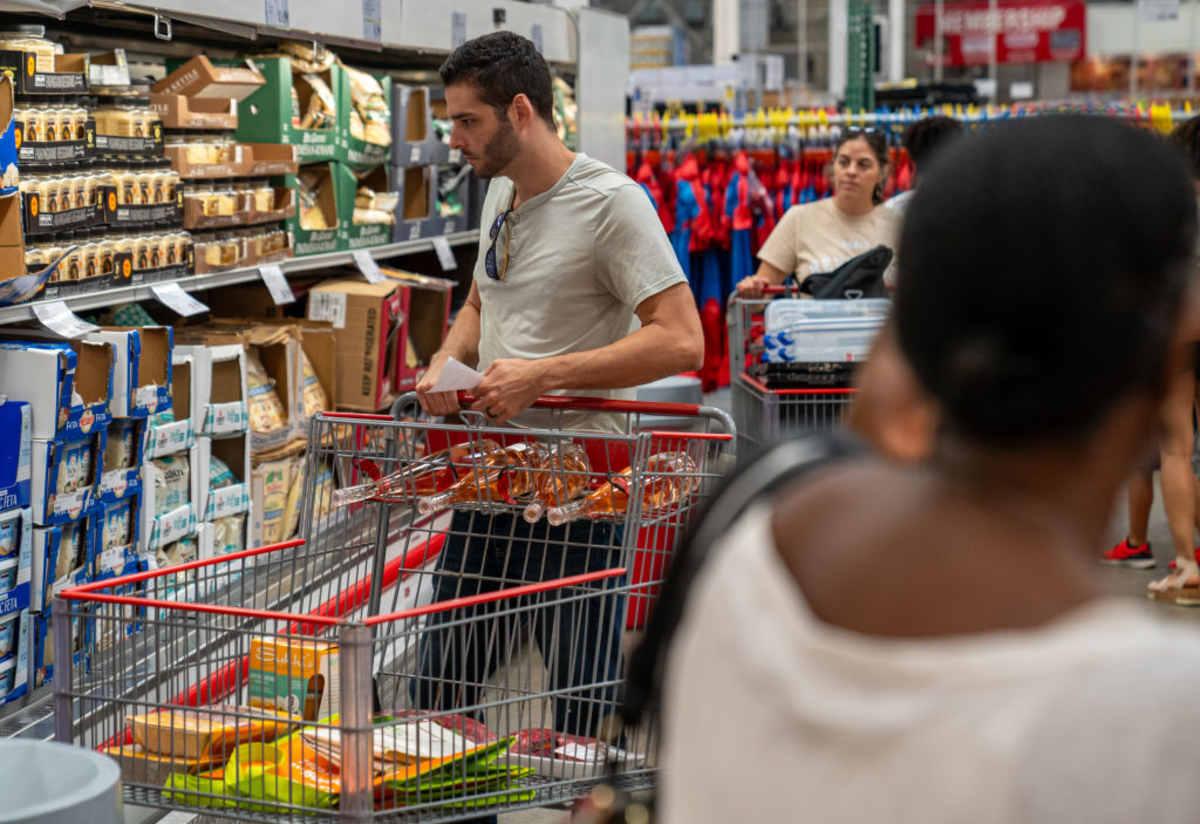
Customers look over food items displayed on August 16, 2024 at the Costco branch in Colchester, Vermont. (Photo by Robert Nickelsberg/Getty Images)
Customers look over food items displayed  (Image Source: Getty Images | Photo by Robert Nickelsberg)

The published report indicated that the average tariff rate began the year at 2.6%, surged by 125% points in April and May as a result of higher taxes on Chinese goods, and then decreased by 115% points in mid-May, ending the year at 13%. According to the analysis, tariffs placed during the first Trump administration caused a 100% pass-through into import prices, which prevented international exporters from lowering their prices. Around 94% of the burden of these tariffs fell on Americans between January and August, 92% in September and October, and 86% in November. 
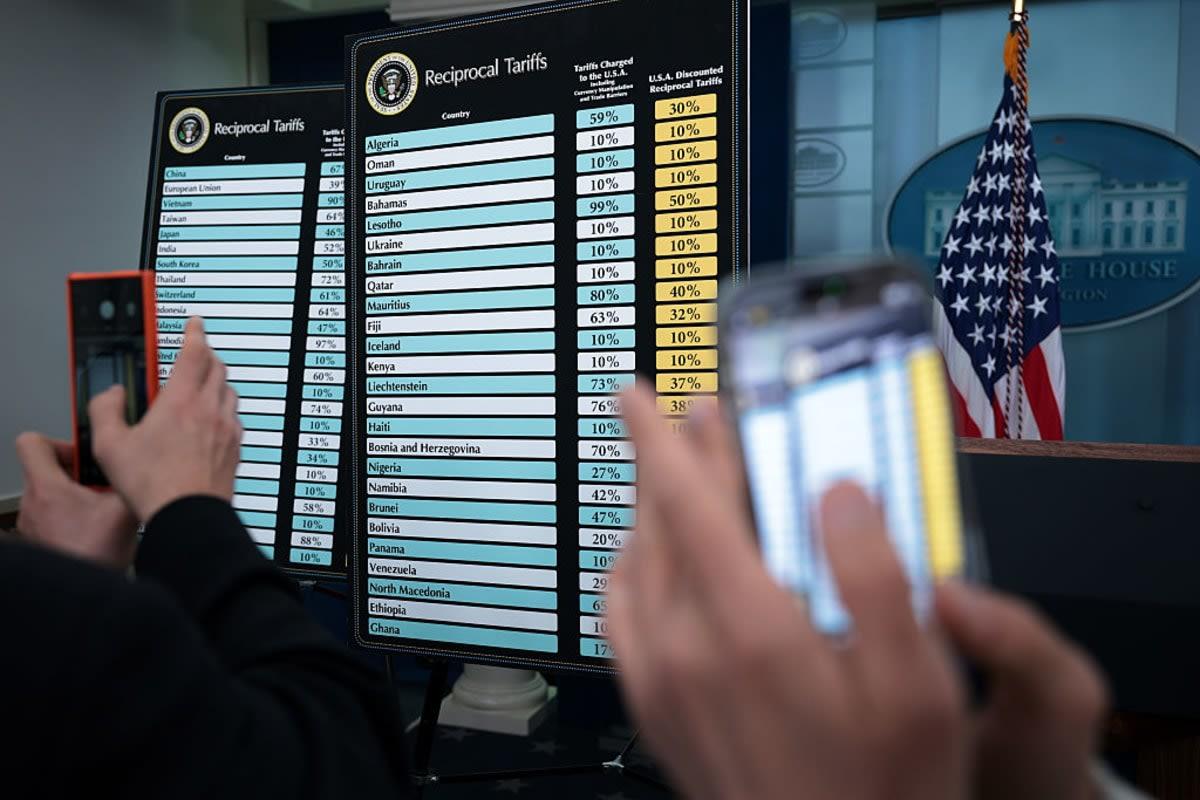
Charts showing the “reciprocal tariffs” the U.S. is charging other countries are on display at the James Brady Press Briefing Room of the White House on April 2, 2025 (Image source: Getty Images/Photo by Alex Wong)
Charts showing the “reciprocal tariffs” the U.S. is charging other countries (Image Source: Getty Images | Photo by Alex Wong)

It stated that, “higher tariffs directly increase the cost of imported goods, raising prices for U.S. consumers and businesses.” When it comes to who will pay the tariffs, the CBO said foreign exporters will absorb 5% of the cost, and in the near term, “U.S. businesses will absorb 30% of the import price increases by reducing their profit margins; the remaining 70% will be passed through to consumers by raising prices.” According to Trump's Wall Street Journal op-ed, foreign companies suffer the majority of the tariff costs. He asserted that in order to prevent larger losses, tariffs are mostly borne by foreign manufacturers and companies.
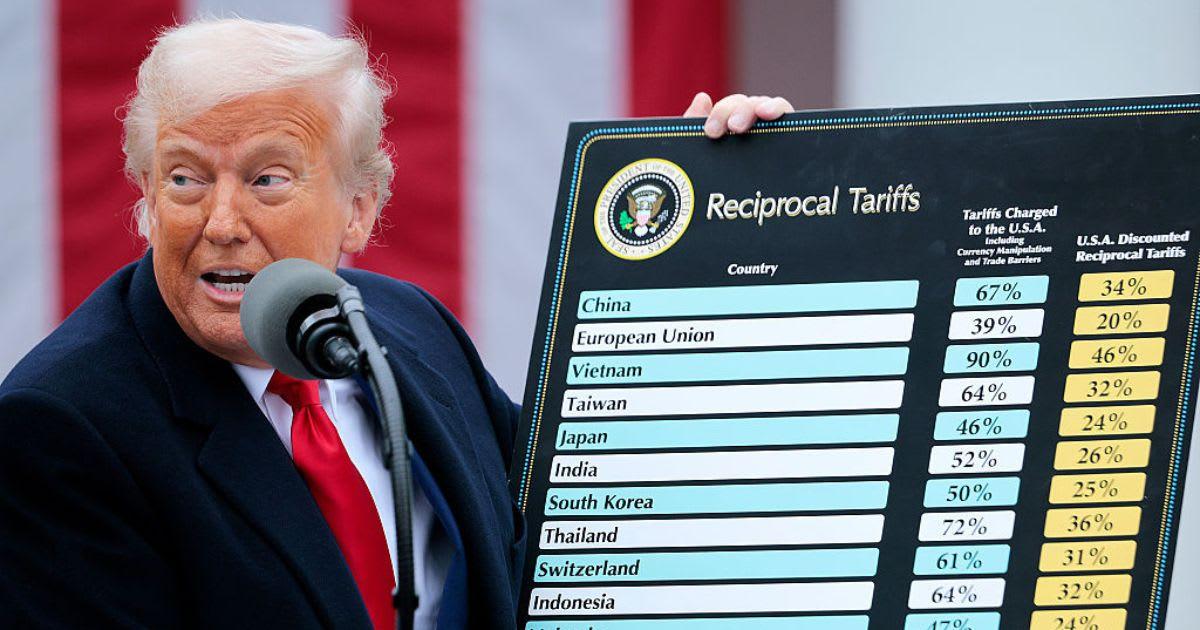
Representative Cover Image Source: Getty Images | Chip Somodevilla
President Donald Trump (Image Source: Getty Images | Photo by Chip Somodevilla) 

The New York Fed's results, however, contradict this, showing that from January to August, U.S. importers absorbed 94% of tariff costs. By November, this proportion remained at 86%, despite exporters bearing a greater portion of the burden, CBS News reported. “In sum, U.S. firms and consumers continue to bear the bulk of the economic burden of the high tariffs imposed in 2025,” the study revealed. Over the past year, companies have been adjusting to Trump's changing tariff policy. Many smaller-scale businesses quietly shut their doors or filed for bankruptcy. By negotiating supplier discounts and moving production to nations with lower tariffs, larger businesses have been able to minimize price increases for consumers while adjusting to higher import charges, The New York Times reported.
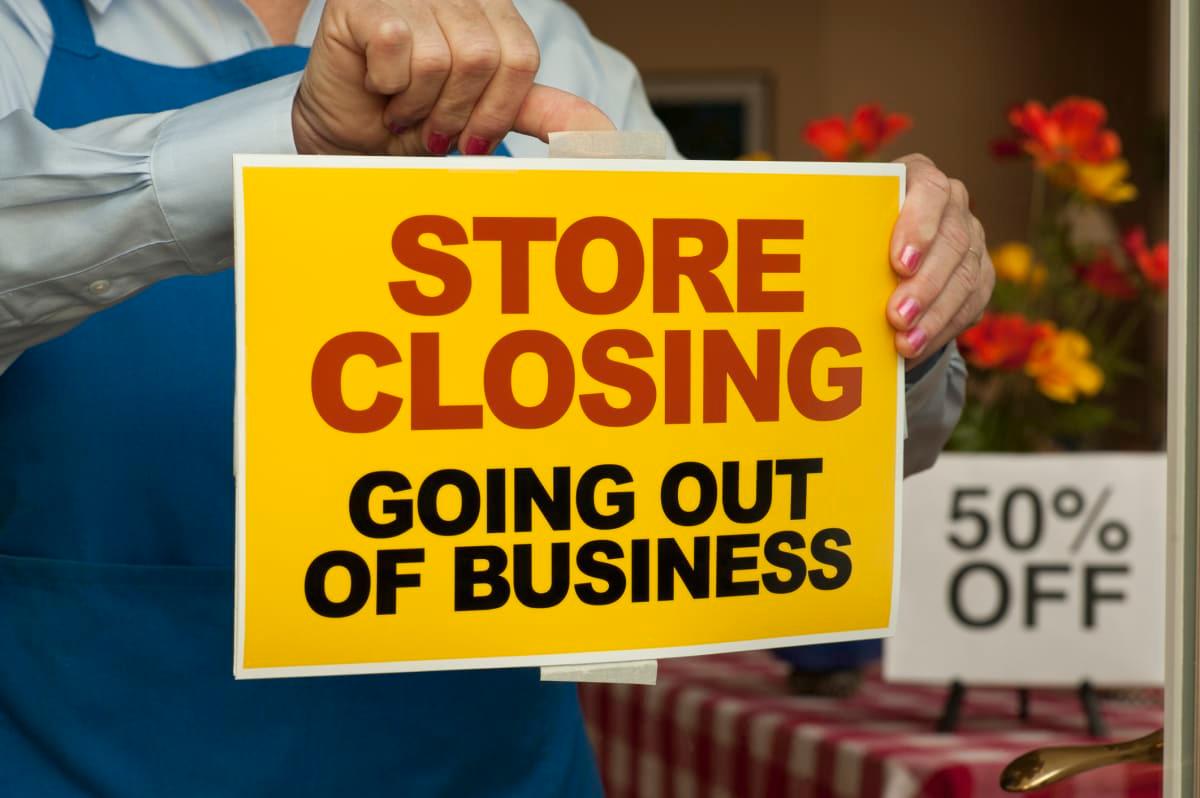
Representative Cover Image Source: Getty Images | KLH49
Business reporting shutdown (Image Source: Getty Images |Photo by KLH49)

Large import tariffs imposed by the Trump administration are intended to increase government revenue, penalize alleged economic exploitation by other countries, and support the home industry. But this tactic has led to unpredictable market movements, increased volatility, and economic ambiguity. 

More on Market Realist:

Trump's tariffs quietly forced 700 American companies to file for bankruptcy in 2025

Top economist warns US could be entering a 'jobs recession' — thanks to Trump's tariffs

Trump’s tariffs come under fire as state leaders claim they're headed toward an economic crisis

MORE ON MARKET REALIST
US consumers could witness another wave of inflation in March despite the IEA releasing oil reserves
21 hours ago
There are safeguards to the use of the technology but day-to-day activities are allowed.
22 hours ago
The contestant came quite close to winning but it was not to be.
22 hours ago
A budget watchdog has sounded the alarm, warning that this would not be sustainable.
1 day ago
Multiple states are taking part in testing programs to ensure that the dream becomes reality soon.
1 day ago
Homeowners are going for adjustable mortgage rates in record rates, reminiscent of the 2008 crisis.
1 day ago
The contestant’s win was impressive, as the game she played is not easy to get right.
1 day ago
The contestant was just happy to be on the show but a surprise win made her experience even better.
1 day ago
People are already struggling with affordability and the war could make things a lot worse.
1 day ago
If consumed, the products could pose serious health risks to some people.
2 days ago
The Trump administration has assured that prices will be back to normal within weeks.
2 days ago
The move reflects a broader shift in tech as companies redirect money from payroll to AI infrastructure
2 days ago
The Energy Secretary said that the uptick in gas prices would only a few weeks.
2 days ago
Carey even ended up having chili spaghetti after feeling the symptoms for the first time.
2 days ago
Find out the production oversight that led the company to the Class I recall from the FDA
3 days ago
The growing AI bubble will burst and workers will have to bear the brunt in the short term.
3 days ago
Small businesses account for a huge chunk of GDP and employ more than 62 million Americans.
3 days ago
Andrew Crapuchettes advises American workers to stay AI-enabled to face a tighter job market situation.
4 days ago
There were a total of 48,307 layoffs in February, down 55% from January.
5 days ago
There could even be a situation in which one may have to give away half of it as income tax.
5 days ago