
Viral Video Offers Scathing Analysis of Why College Graduates Are Struggling With House Rents
Smith's video exposes the harsh reality of modern graduates who are allocating nearly half of their income to rent.
Feb. 9 2024, Published 3:31 a.m. ET

In a scathing analysis, Florida-based Realtor and TikTok sensation Freddie Smith (@fmsmith319) has meticulously dissected the financial struggles of today's college graduates, presenting a compelling case for the alarming proportion of their income swallowed by rent. The video, amassing over 6.4 million views, delves into the stark contrast between renting scenarios in 1980 and 2024. Smith contends that the current generation of graduates is grappling with dedicating almost half their earnings to housing, paralleling the challenges faced by minimum-wage workers four decades ago.
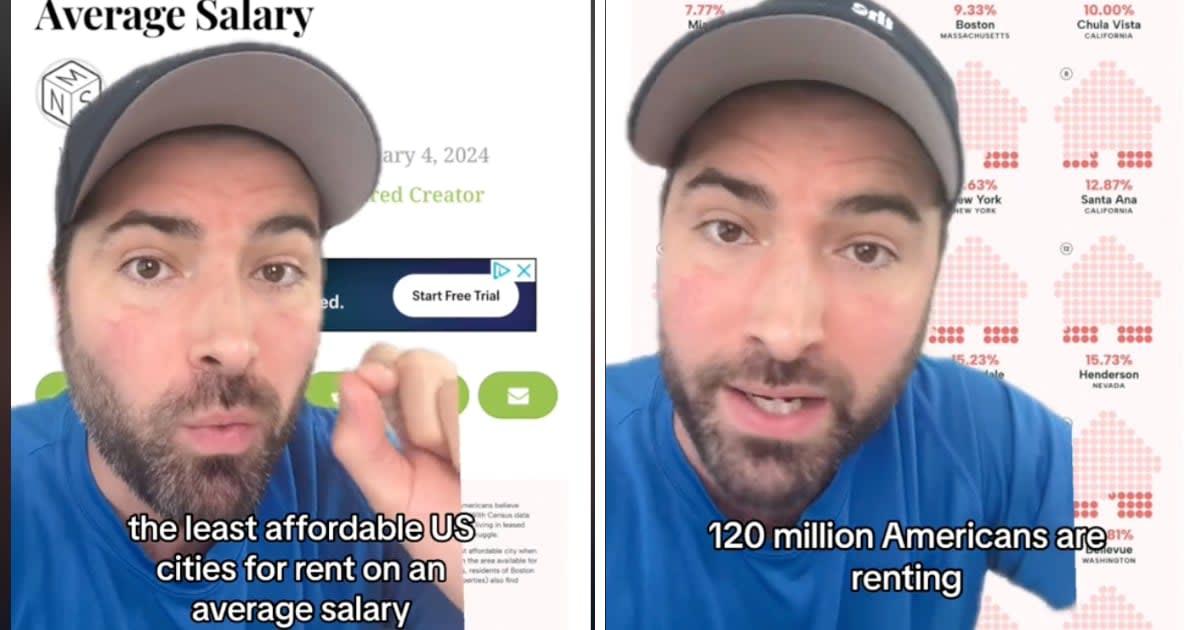
The thought-provoking breakdown challenges stereotypes and confronts the assertion that millennials and Gen Z should cease complaints about housing affordability. Smith navigates through historical rent and wage data, emphasizing the staggering increase in average rents juxtaposed against a sluggish growth in the federal minimum wage.
The TikTok video opens with a caption aimed at hypothetical baby boomers, challenging the narrative that younger generations should cease their housing-related grievances. Smith astutely notes that those expressing discontent aren't merely minimum-wage earners but encompass individuals earning substantial annual incomes, ranging from $60,000 to $90,000. The poignant argument sets the stage for a mathematical exploration of the rent-to-income ratio across different eras.
Smith takes a historical perspective, contrasting the scenario in 1980, where rent averaged $243, with a federal minimum wage of $3.10, resulting in a 48.9% allocation of gross income for rent. Fast-forwarding to 2024, Smith spotlights the current average rent of $1,747 and a federal minimum wage of $7.25, portraying a staggering 75% of gross income allocated to rent, showcasing the exacerbation of housing affordability challenges.
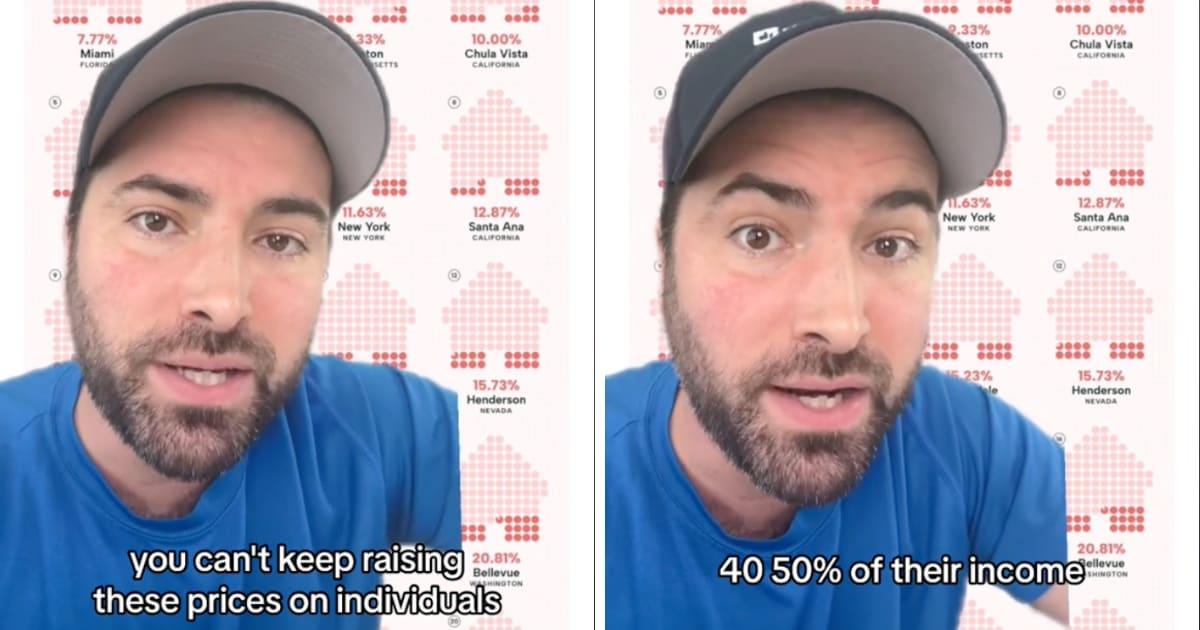
While acknowledging the variations in rent averages, Smith considers a scenario where the federal minimum wage is generously doubled to $14.50, providing a monthly income of $2,320. Even with this adjustment, the rent would consume 75% of gross income, underlining the dire situation faced by those on minimum wage.
Smith intensifies the analysis, citing a ZipRecruiter figure indicating that the average college graduate earns $24 per hour, translating to a monthly income of $3,840. Despite this relatively higher income, Smith points out that a college graduate would still allocate 45.4% of their gross income to rent, mirroring the struggles of a minimum wage worker in 1980.
The video concludes with a stark realization that a minimum wage worker could enter the job market swiftly, learning skills within weeks while a college graduate invests four to six years in education only to face insufficient earning potential. The comment section resonates with generational frustration, echoing sentiments of financial challenges beyond rent, including food, childcare, insurance, car payments, and student loans.

One user, @GenZVoice, emphasized how the narrative extends beyond minimum-wage earners, highlighting the struggles of those with substantial annual incomes ranging from $60,000 to $90,000. This sentiment resonated, setting the stage for an in-depth exploration of rent-to-income ratios across different eras. @FinanceStruggle_ joined the conversation, expressing concern about the drastic increase in average rents against the sluggish growth in the federal minimum wage.

The impact is further emphasized when @EduDebtChaos highlighted the challenges faced by those on minimum wage, even with a generous hypothetical doubling of the federal minimum wage to $14.50. As the dialogue intensified, @GradLifeRealities brought attention to the additional financial burdens graduates face beyond rent, such as food, childcare, insurance, car payments, and student loans. The comment section transformed into a platform for individuals to share their personal struggles, with @StrivingGraduate revealing, "I have 2 bachelor's degrees, make over 80k a year, live within my means, not a shopper, and still can't buy a house."