
TikToker Suggests America has Silently Slipped Into Economic Depression; He may Have a Point
Freddie Smith's TikTok video comparing present-day America to the Great Depression goes viral, highlighting stark cost-of-living differences.
Jan. 14 2024, Published 10:30 p.m. ET

Has America slipped into economic depression?
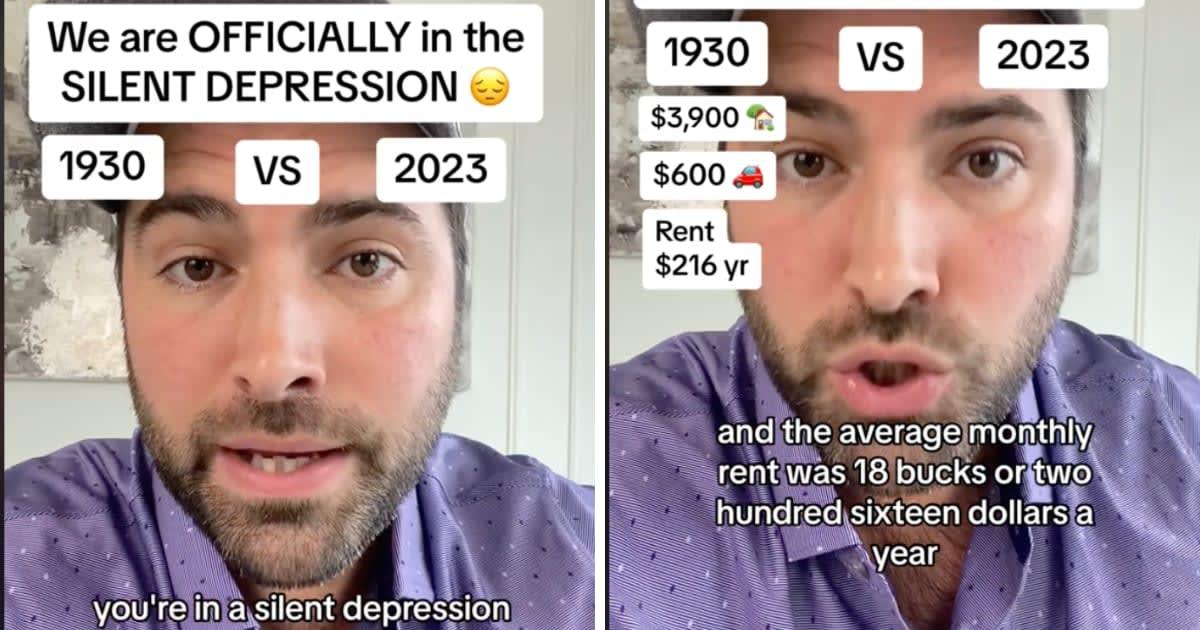
From lifestyle choices to healthcare and politics to personal finance, TikTok has become a digital ecosystem for millennials and Gen Z to discuss most things that make a difference in everyday life. Now a viral TikTok video by influencer Freddie Smith, a real estate agent from Orlando, Florida, has ignited a social media debate, as he draws parallels between the economic conditions of present-day America and the state of the country during the Great Depression of the 1930s. Despite seemingly positive economic indicators like low unemployment and robust GDP growth, Smith argues that there is an underlying issue causing a "silent depression."
Cost of living disparities
Smith has based his comparison on the stark differences in the cost of living between the two eras. During the Great Depression, the average home cost $3,900, a car was $600, and monthly rent was $18. Fast forward to 2023, and the average home is $436,000, a car is $48,000, and the average rent is $2,000 per month. Smith contends that while the average income today has also gone up to $56,000, the cost of living has dramatically outpaced income growth, creating an economic disparity.
Income growth lagging behind
Examining the ratio of housing costs, car expenses, and rent to average income, Smith highlights that these essential components have become increasingly unaffordable for the average American. The average home, which was three times the average salary during the Great Depression, is now eight times the average salary. Similarly, the car, which was 46% of the salary back then, is now 85% of the salary. Most strikingly, rent, which used to be 16% of the average salary, has surged to 42% today.
Social media reaction
Smith's TikTok video has resonated with users, accumulating 8.7 million views and over 781,000 likes. Many users agreed with his assessment, considering the growing financial challenges faced by ordinary Americans. The disparity between income and living costs has become a focal point of discussions on social media platforms.
Present-day economic realities
While Smith's analysis of economic trends raises concerns, it's also crucial to note the distinctions between the current scenario and the Great Depression. Today's America does not grapple with the severe unemployment rates witnessed in the 1930s. According to the latest jobs report, nonfarm payrolls increased by 150,000 in October 2023, with an unemployment rate of 3.9%. Unlike the Great Depression, which was triggered by a catastrophic stock market crash, the present-day investment climate appears stable. The Dow Jones Industrial Average has experienced a 9% climb in 2023 and an impressive 48% increase over the past five years. This stands in stark contrast to the historic market collapse that marked the onset of the Great Depression.
Economic output and GDP growth
The contraction in economic output that defined the Great Depression is absent in today’s economy. From 1929 to 1933, real GDP in the U.S. fell by 29%, while the Commerce Department's recent estimate indicates a 5.2% annual increase in real GDP in the third quarter of 2023.
While Freddie Smith's TikTok video has sparked conversations about economic challenges in America, experts caution against directly equating the present with the Great Depression. While income disparities and affordability issues are real concerns, key economic indicators suggest a more nuanced view of the current economic landscape.