High diesel prices are hurting American farmers badly — just as planting season begins

Rising international oil prices are causing trouble for American consumers, especially farmers, as gas and diesel prices continue to climb. Diesel is essential for many areas of farm production, and the issue is significant as the planting season is just about to begin. With tight profit margins and an energy-dependent season ahead, farmers across the country are forced to budget carefully, with many anticipating higher costs and shrinking output.

In retaliation for the U.S. strikes in the Middle East, Iran declared the closure of the Strait of Hormuz, a narrow shipping corridor through which about 20% of the world's daily oil supply passes. With this, crude oil prices jumped over $100 a barrel, and gas prices across the U.S. spiked. While gas prices jumped, diesel prices skyrocketed with the national average price reaching $4.78 per gallon this week, a 27% increase since February, according to the AAA. Thus, anxiety among farmers is growing, as the spring planting season is one of the most energy-dependent times of the year.
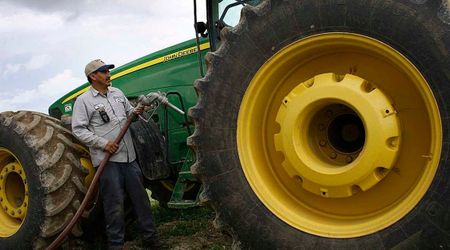
"With the timing of the recent events right here at planting season, it kind of caught us off guard a little bit," Will Hutchinson, a Middle Tennessee farmer, told Fox Business. The farmer uses about 500 gallons of diesel every day during a typical planting season, and during the fall harvest season, he uses about 1,500 gallons of diesel and 5,000 gallons of liquefied petroleum (LP) gas on average every day. To cushion against fluctuations, farmers typically store fuel, and Hutchinson shared he holds about 20,000 gallons of diesel and 6,000 pounds of LP fuel, but it may not be enough. "If we don't get some resolution here in the next few months, we'll burn through that buffer that we have here," he told the publication.

While diesel is primarily used for powering equipment, Casey Kelleher, a Whitewater corn farmer for over 26 years, shared with 27WKOW that the higher cost will impact operations beyond that. "Spraying, with the market of fuel going up $1, it's going to cost 15 cents an acre more to spray, or 50 cents an acre more to plant," said Kelleher. He further pointed out that the biggest concern is the cost of fertilizer and the trucking of products, both of which require diesel, which isn't stored on the farm. Despite the challenges, Kelleher has remained positive, adding that farmers are keeping an eye on the markets and local suppliers to offer some relief.
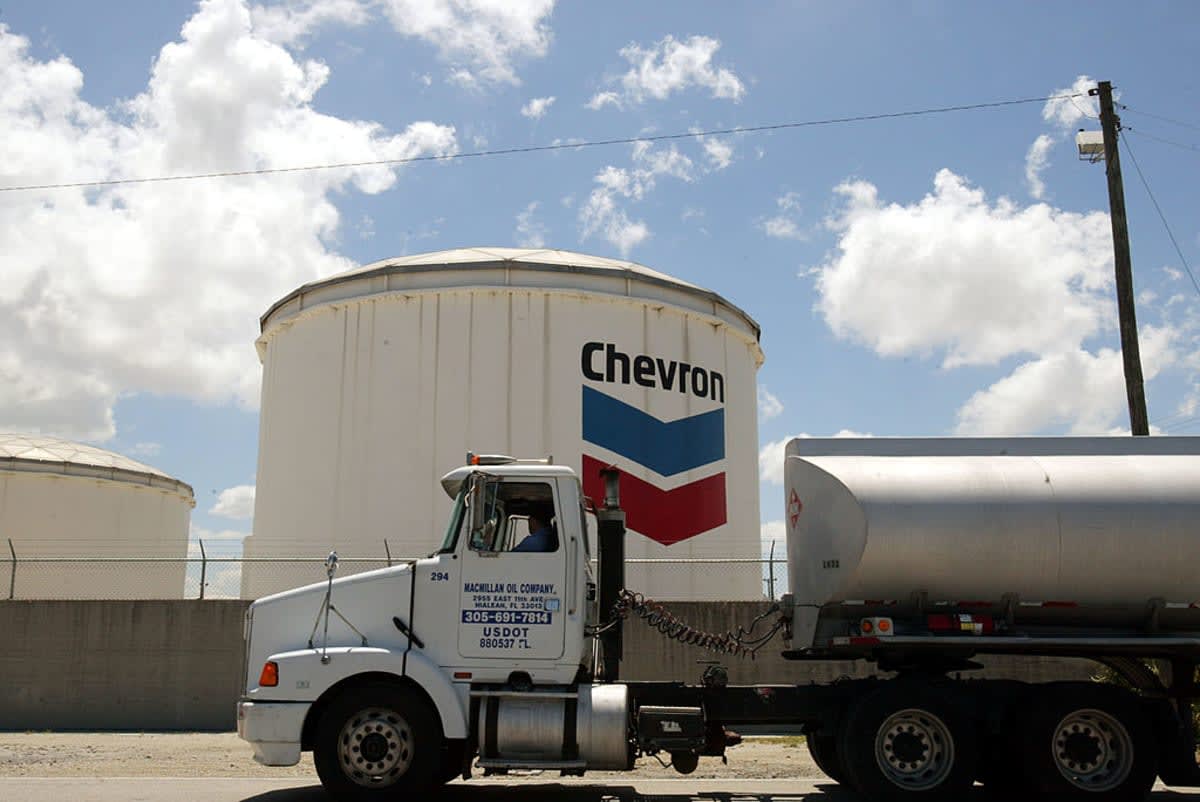
However, relief isn't expected soon as experts believe the fuel prices will hover at higher levels even if crude oil prices drop. "Oil prices have been exceptionally volatile. Today they are dropping, yesterday they were spiking up. It is difficult for producers to accurately price gasoline in such an environment," Wayne Winegarden, senior fellow in business and economics at the Pacific Research Institute, told CBS News. He added that until greater clarity emerges, the crude prices will keep fluctuating and consumers may continue to pay more.
More on Market Realist:
Middle East crisis threatens to make a lot of things other than gas expensive for Americans
Oil price hike sparked off by the war could make life more expensive for Americans
Trump's latest move has led to a surge in gas prices — but his administration says don't panic