
Bernie Sanders Leads Legislation for 32-Hour Workweek, Stirring Debate On Labor Reform
Vermont Senator Bernie Sanders suggested a new law that proposes to decrease the typical workweek from 40 to 32 hours while maintaining wage parity for all.
March 18 2024, Published 4:21 a.m. ET

There's a rising movement in Congress to reduce the overall workweek. Recently, Vermont Senator Bernie Sanders suggested a new law that proposes to decrease the typical workweek from 40 to 32 hours while maintaining wage parity for all, per The New York Times. The shift would occur gradually over four years. It implies that employees will receive overtime pay if they work more than 32 hours each week.
Right now, overtime compensation begins after 40 hours of work each week. This new law will increase your compensation if you work more than eight hours a day. You will also receive double your regular compensation if you work more than 12 hours a day.
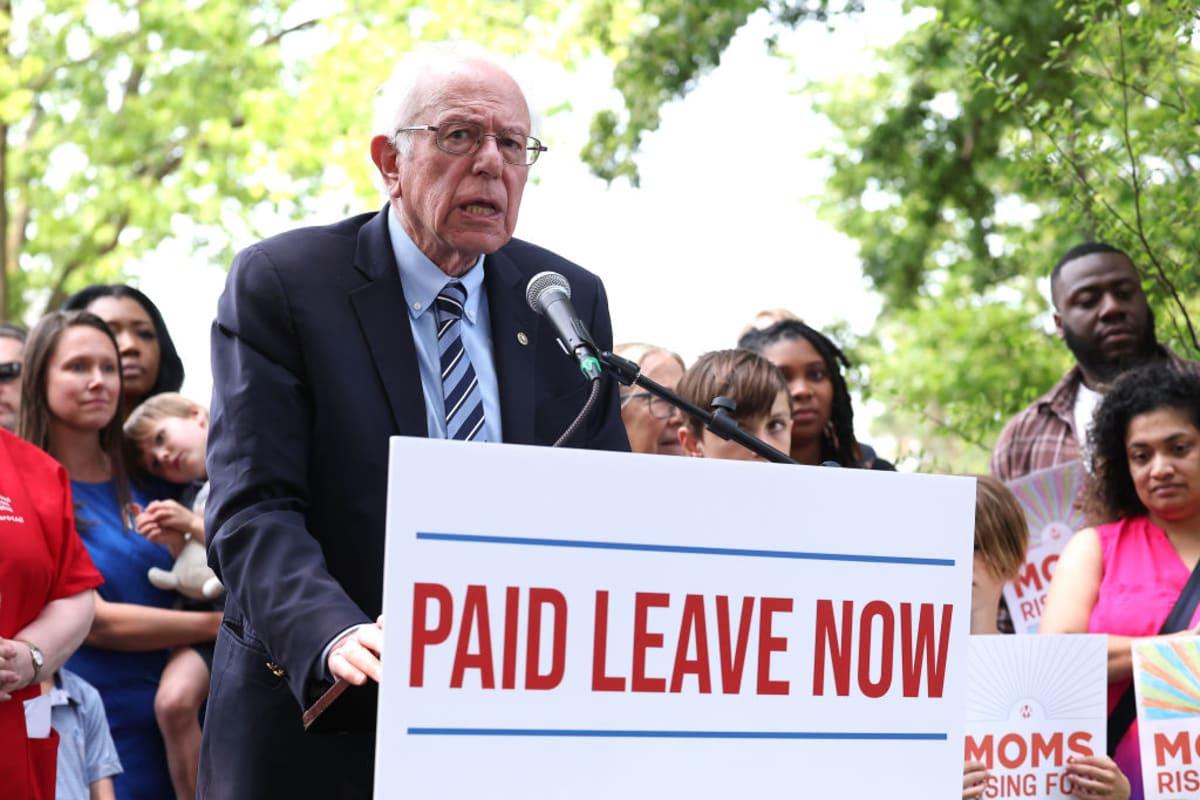
Argument for a shorter workweek
Since 1940, the Fair Labor Standards Act has set the standard 40-hour workweek in the United States. Advocates of a shorter workweek argue that while technology has boosted productivity, it has not yet led to higher wages or more leisure time. Senator Sanders emphasized that working-class Americans should benefit from technological advancements like automation and artificial intelligence, not just businessmen and investors. Hourly employees in various sectors (retail, manufacturing, transportation, hospitality, construction, etc.) would be affected by this proposed legislation. Some believe that businesses would either expand their workforce by reducing the number of workweeks or offer higher pay for the same number of hours worked if the law were enacted.
Previous discussions in Congress
The idea of a shorter workweek has been discussed in Congress before, by the Senate's proposal. A proposal for a 32-hour workweek was included in both a House of Representatives bill and a bill reintroduced by California Representative Mark Takano in March 2023. Takano initially presented this measure to Congress in 2021, but it did not gain traction despite support from the Congressional Progressive Caucus and online discussions. In a recent hearing held by Senator Sanders, who leads the Senate Committee on Health, Education, Labor, and Pensions, the measure was discussed. Shawn Fain, president of the United Auto Workers, mentioned the concept of a 32-hour workweek during the hearing, which had been suggested by the union during strikes in 2022.

Opposition and concerns
Some Republican senators oppose the proposal. For example, Louisiana's Bill Cassidy contended that requiring a 32-hour workday might have a detrimental impact on trades, restaurants, and small enterprises as they may turn to layoffs if they are unable to maintain productivity.
Global experiments and prospects
Trials of four-day workweeks have been carried out around the world in recent years. Both employers and employees have favorable things to say about these experiments. Reduced stress, reduced burnout, and enhanced pleasure, well-being, and productivity were noted by the participants. Several countries like France have already established laws enforcing a shorter workweek. France, for example, implemented a 35-hour workweek in 2000 and is contemplating reducing it further to 32 hours.
According to Gallup data from 2019, nearly half of full-time working adults in the U.S. work more than 40 hours per week. This includes 39% who work at least 50 hours weekly. Surveys show that the majority of U.S. workers, about 87%, are interested in a four-day workweek, and 82% believe it could be successful if widely adopted in the country.