
Celebrities Targeted Globally in Rampant Fake Ad Scams; The Battle for Accountability
Revealing how fake online ads use celebrities' names to trick people worldwide, highlighting the need for accountability in digital advertising.
Nov. 7 2023, Updated 9:23 a.m. ET

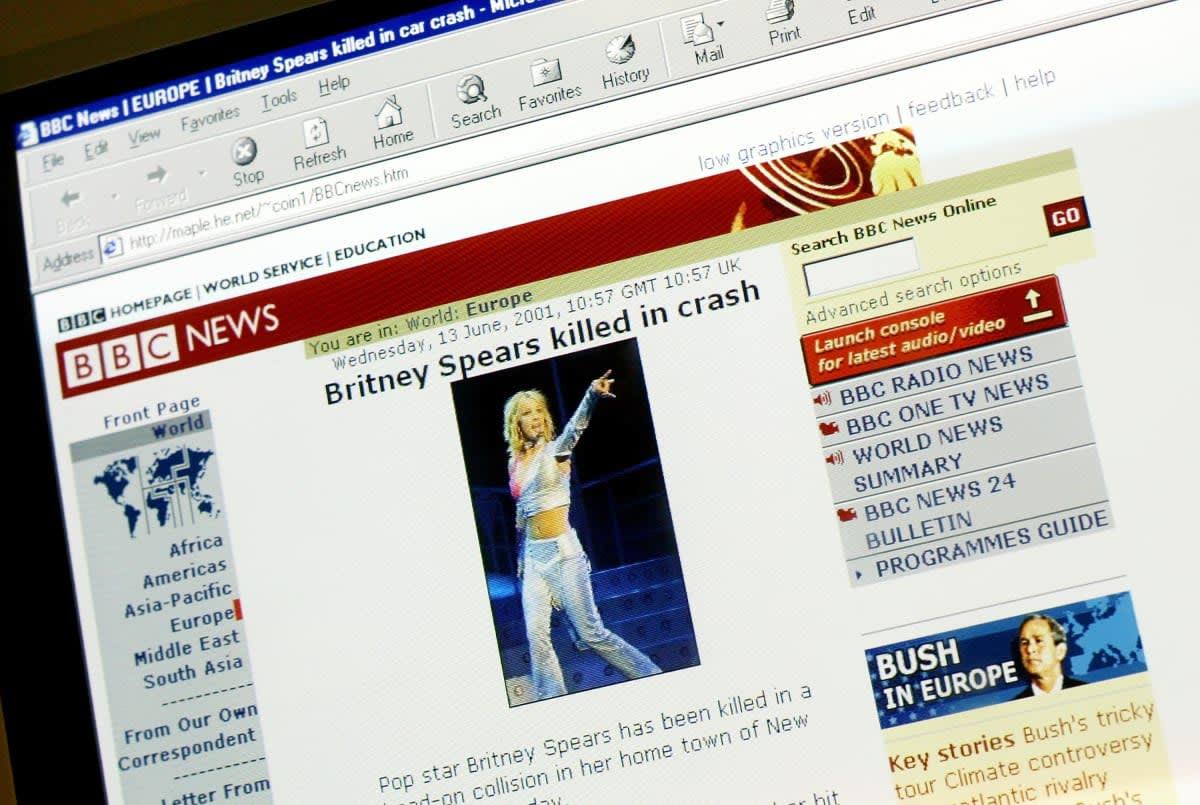
In today's digital age, it seems like nobody is immune to the scourge of fake ad scams. These scams often feature photoshopped or AI-generated images of celebrities, enticing unsuspecting victims with dramatic headlines like "Is this the end of his career?" or "The scandal that shocked everyone." One of the most prominent faces regularly co-opted by these scammers is Australian celebrity Richard Wilkins, who receives numerous inquiries daily from people bewildered by the authenticity of these fraudulent advertisements.
"The thought of some innocent person clicking on that link and spending their hard-earned money on some investment plan that they think I'm endorsing, that does upset me," says Wilkins. He's not alone; many other celebrities worldwide are also targeted in these scams.

Online ad scams are an international problem
These deceptive ads are not confined to a single country; they are a global issue. Cyril Hanouna, a French radio and TV presenter, finds himself at the center of similar scams in France. The ads use sensational language, such as "Est-ce la fin de sa carrière?" (Is this the end of his career?) and "Cyril ne savait pas que la caméra enregistrait toujours" (Cyril didn't know that the camera was still recording), to lure unsuspecting victims. What's alarming is that this is not limited to Australia and France; these scams also target public figures in Poland, Sweden, Spain, and many other countries. It's a phenomenon that spans borders and cultures, demonstrating the reach of these fraudulent operations.
The 'Wild West' of advertising
Professor Mark Andrejevic from Monash University aptly describes this deceptive landscape as the "Wild West" of advertising. The internet, particularly social media platforms, has created a subterranean advertising economy that operates differently from traditional media channels. It escapes the forms of accountability that other media are subject to, allowing scammers to thrive.
These scams often fly under the radar due to their sheer scale and the difficulty of tracking down those behind them. Some of these scam operators are working across international borders, creating a significant challenge for authorities. As revealed through Meta's ad library, a verified Facebook page for a Brazilian politician was running ads in multiple languages, targeting individuals in different countries simultaneously.

How online ad scammers operate
IDCare, a charity that aids victims of scams and frauds, has seen a substantial increase in the number of people seeking support. More than 10% of these cases are associated with celebrity "endorsements." Sarah Cavanagh, IDCare's manager of education and outreach, points out that these are not small-time scammers. These are sophisticated, offshore criminal syndicates that employ psychological techniques to keep victims ensnared in their fraudulent schemes.
The scam typically starts with a click on a fake celebrity ad. Once the victim engages, they are directed to a realistic-looking website that promotes an investment opportunity with incredible return rates, available for a limited time. The scammers create a sense of urgency, pushing victims to invest more. However, despite their initial investment, cashing out is never an option.
Celebrities fight back online scam ads
Celebrities like Richard Wilkins and David Koch have had enough. They've considered taking legal action, including defamation suits against the platforms that permit these ads. Wilkins acknowledges the damage it does to his reputation and credibility, which he has worked hard to establish over the years.
David Koch, a TV presenter, has called for regulators and governments to do more. He recounted a story of a lady who invested $10,000 in one of these scam ads that appeared on her Bible app. The damage to reputations and financial loss is something celebrities are no longer willing to tolerate.
Meta's responsibilities
In Australia, the competition regulator has taken Meta (Facebook's parent company) to court over these ads, alleging false, misleading, or deceptive conduct. The ACCC has also accused Meta of aiding and abetting or being knowingly concerned in false or misleading conduct and representations by the advertisers.
A Meta spokesperson maintains that the company is actively working to combat scams through technology and collaboration with law enforcement agencies. However, Jeannie Marie Paterson from the University of Melbourne Center for AI and Digital Ethics argues that this case will challenge platforms' claims that they are mere conduits and should not be held responsible for the content of advertising material. She suggests that if platforms actively target and personalize ads, they should bear responsibility for scam ads.
Demand for government regulation on digital platforms
As the problem escalates, celebrities and experts believe that governments should step in and regulate the advertising space on digital platforms. Without effective self-regulation from the platforms themselves, stronger government intervention may be the only solution. The prevalence of these scams, which prey on people's trust and gullibility, suggests that a Wild West mentality still pervades the online world. It's high time that governments and authorities take steps to safeguard consumers and ensure that these fraudulent practices do not tarnish the reputations of innocent celebrities. Until then, it's essential to remain vigilant and report suspicious activity, whether you're a famous face or an everyday internet user.