
ECONOMY & WORK
MONEY 101
NEWS
PERSONAL FINANCE
NET WORTH
About Us Contact Us Privacy Policy Terms of Use DMCA Opt-out of personalized ads
© Copyright 2023 Market Realist. Market Realist is a registered trademark. All Rights Reserved. People may receive compensation for some links to products and services on this website. Offers may be subject to change without notice.
MARKETREALIST.COM / ECONOMY & WORK

Expert reveals why US economy has that ‘weird feeling of something you like becoming worse’

Tim Wu, a Columbia Law School professor, says companies are trying to find power over people.
PUBLISHED DEC 1, 2025
Woman checking her phone for transaction updates while standing at an ATM (Cover image source: Getty Images | Alex Potemkin)

Having to spend more for quality products is taking its toll on consumer sentiment. Modern American capitalism has devolved into a system where companies aren't trying to make a good product but trying to "find power" and extract as much as they can from consumers, says Tim Wu, a Columbia Law School professor who previously served in the Biden administration, as “an architect of the antitrust policy." Speaking to Fortune about his latest book, Wu expressed that there is a sense of "economic resettlement" across the nation that coincides with the "K-Shaped" nature of the economy.
Representative illustration (Image source: Getty Images/Photo by Frankreporter)

On the release of his new book, "The Age of Extraction", Wu shared with the publication that there is a connection between the political volatility and the feeling that "our system is not fair." He defines the problem as a shift in business goals where companies are moving away from building a good product that people would buy toward models that seek to “find power over someone and suck as much as they can out of them.” He added that it was an economy-wide problem that was affecting consumer sentiment. "Everything kind of just creeps. It’s that weird feeling of something you like becoming worse.” He added that his "understanding of America is that it’s the place where things are supposed to get better."
Getty Images Credit:	ArtistGNDphotography (Representative)
Representative image (Image source: Getty Images/Photo by ArtistGNDphotography)

He details this in his book, writing about “extractors” and the “extracted” in a way that has similarities with the current K-shaped economy, where the rich are thriving and getting richer, and the poor are struggling with the rising costs. “I think we have moved in the direction of an economy where the focus of business models is the accumulation of market power and then extraction, which, by definition, almost by basic microeconomics, is going to result in a lot of [upward] wealth redistribution,” Wu said. He added that many of the industries that used to cater to the middle class or upper middle class are being driven down in favor of a couple of industries that yield outsized returns.

According to Forbes, the driving force behind the trend is the wage growth that has continued to outpace inflation only for the top earners in the nation. Meanwhile, the lower-income households continue to struggle with the aftereffects of the pandemic, inflation, and rising costs that make their wage gains look stagnant or even disappear entirely. This has, in turn, had an impact on the spending habits of most Americans, as per the publication.
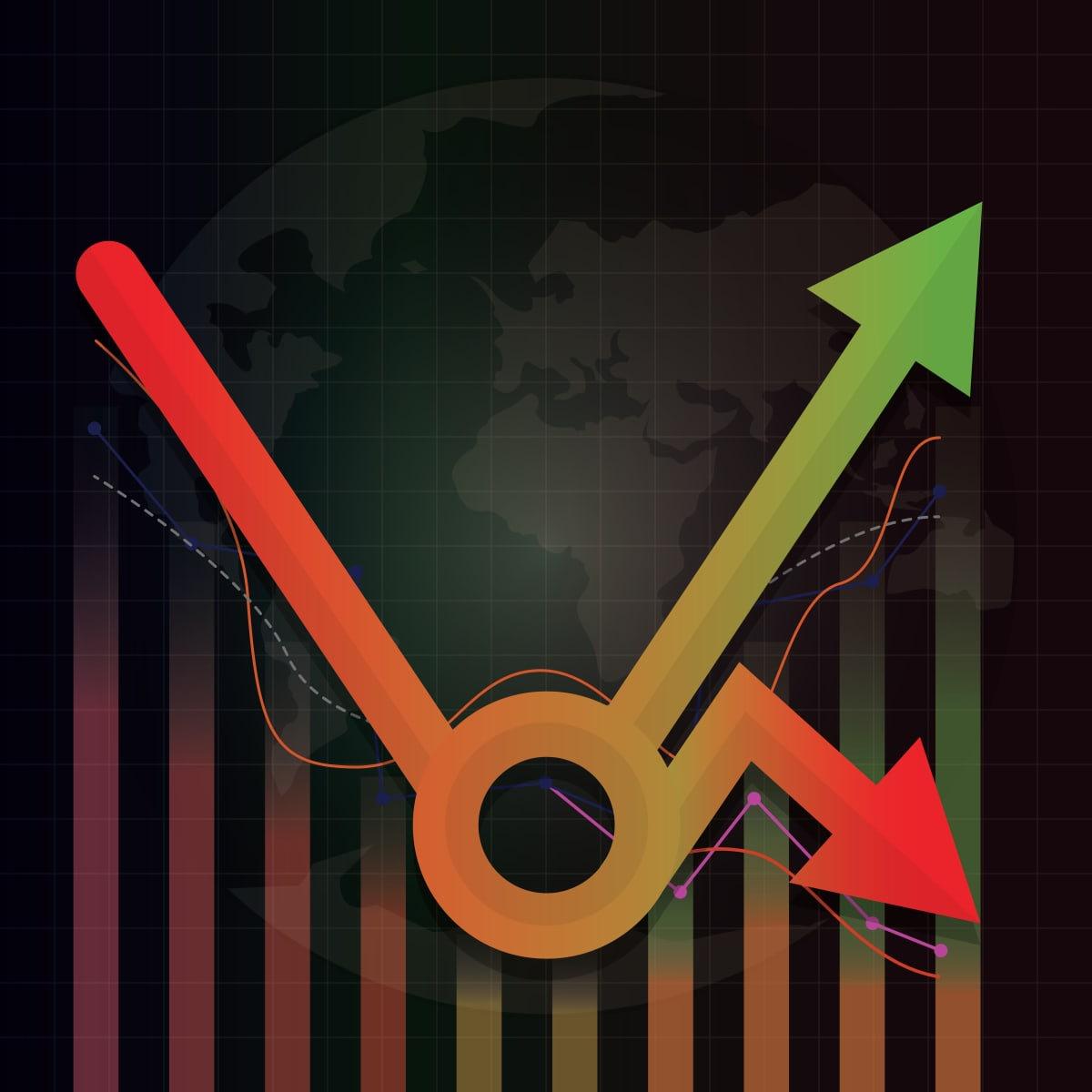
Representative illustration showing a K-shaped graph (Image source: Getty Images/Photo by Foxeel)

However, Wu had an unusual example to share, to illustrate a possible solution for the concerning trend. He cited examples from sports, like the NFL, where the league has improved instead of getting worse by coming up with a market structure that allows smaller teams to get big players. He added that he hopes that America doesn't become a place for the extractors, saying, “I think we can do better. I’m a big believer, frankly, in business. I think we need a return to this idea, you can reap what you sow, that your investments will get you somewhere.”

More on Market Realist:

Hedge fund veteran issues major warning to investors about AI: 'The bubble is ahead of us'

Ford CEO Jim Farley admits the American economy is 'in trouble' — and blames one major cause

The housing market in the US suddenly favors buyers — but not until you hear the catch

MORE ON MARKET REALIST
The home improvement retailer cut its earnings projections for a third quarter in a row
22 hours ago
The President has often made claims that are not entirely true and this seems to be one of them.
23 hours ago
The retailer has its own payment service that customers are free to use apart from cash and card.
23 hours ago
Claudia Sahm told Fortune that the Fed was stuck in a hard place.
1 day ago
Nela Richardson, chief economist at ADP told Fortune, the granular data shows a shift in job trends.
1 day ago
Shoplifting is a big problem in the country and retailers lose several millions each year.
1 day ago
The two are having a very public falling out and Greene is even going to leave Congress next year.
1 day ago
"She was the worst player/lowest scoring this evening otherwise," a fan reacted.
1 day ago
Jennings went on the greatest "Jeopardy!" run of all time, winning a whopping 74 games.
1 day ago
Clearly, the economy is not in the best shape thanks to inflation and unemployment.
1 day ago
With the cost of Medicare premiums going up next year, things are not looking good for them.
1 day ago
In these uncertain times, people are always looking for options to grow their wealth.
1 day ago
Co-chairman of Oaktree Capital raised serious questions on the impact of AI on jobs.
2 days ago
The fast food chain might have wanted to cut costs but they ended up angering several customers.
2 days ago
The mother of two said that one of her daughters had tricked her by recording an audition tape under the guise of a school assignment.
2 days ago
While skeptics often draw comparisons, the outcome of the AI boom may be different.
2 days ago
The guest said that she did not really care about the item for about 20 years after finding it.
2 days ago
The economist noted that smaller businesses had no choice but to lay people off as costs increased.
2 days ago
Thousands cannot afford to pay so much for groceries and are being creative with what they have.
2 days ago
Customers who might have purchased the product would do well to throw it away or get a refund.
3 days ago