
Oluwalopeye “Lopsii” Olagoke Built Nezz After Seeing How Opaque Financial Workflows Can Be
The entrepreneur’s latest company grew out of years spent inside billing, payouts, compliance, and the hidden friction businesses learn to tolerate.
July 1 2026, Published 4:12 p.m. ET

Some problems in finance do not announce themselves all at once. They show up in delayed confirmations, unclear handoffs, manual follow-ups, and money sitting still while everyone waits for the next step to be completed. Oluwalopeye “Lopsii” Olagoke saw that pattern while working inside billing, payouts, compliance, and financial operations.
Before founding Nezz, he built Attendify, a billing and compliance company that enabled more than $90 million in billing and payouts. That experience gave him a close view of how much effort can sit behind a transaction that looks simple from the outside.
Olagoke saw how much work had to happen behind the scenes before money could move cleanly from one party to another. He saw where systems worked. He also saw where people were forced to cover for systems that did not.
“The more I worked around payments and compliance, the more I noticed that the hardest parts were often hidden from view,” Olagoke says. “A transaction could look straightforward from the outside, but the people managing it were dealing with uncertainty, follow-up, and steps that did not always connect.”
At first, those problems looked like everyday operational headaches. A delayed update. A missing confirmation. A process that required one more manual check. A team waiting because the next step was not clear enough. None of it looked dramatic on its own.
Over time, the pattern became harder to ignore.“I kept seeing businesses adjust around friction instead of removing it,” he says.
“That changes how you think about the problem. You start to realize the workflow is not just inconvenient. It is shaping how people make decisions.”
That realization eventually led Olagoke to Nezz, the company he is now building around escrow transaction, milestone payments and high-value transaction processes. The focus is specific, but the frustration behind it is broad. In many industries, large transactions still depend on processes that feel older than the financial technology surrounding them.
Olagoke became interested in the space where the transaction exists, but the process remains unclear. Money may be waiting. Parties may be aligned. Documents may be moving. Still, the people responsible for getting the transaction across the finish line may not have the visibility they need.
That gap became the beginning of Nezz.
“Some inefficiencies survive because people stop questioning them,” Olagoke says. “They become part of the way business is done.
”Escrow, milestones and high-value transactions are not casual workflows. They involve serious capital, regulated requirements, multiple stakeholders, and real consequences when something goes wrong. The people responsible for these transactions are cautious because they have to be.
That caution has shaped Olagoke’s approach.
“You cannot build for this space by assuming the old way is stupid,” he says. “A lot of these processes exist because people are trying to manage risk. The question is whether the infrastructure can help them manage that risk with more clarity.”
That is a different kind of founder challenge. It is not only about spotting inefficiency. It is about understanding why the inefficiency lasted. In Olagoke’s view, many financial workflows persist because they are familiar, not because they are ideal. Teams learn the workarounds. They remember who to call. They know where the delays usually happen. The pain becomes part of the job.
Nezz is being built for the parts of that job that should not have to stay painful.
The company is developing infrastructure that helps businesses manage high-value transactions with better visibility and fewer disconnected steps. It has developed an early transaction pipeline representing approximately $300 million in potential transaction volume, received a letter of intent from a manufacturing company, established banking infrastructure through Wells Fargo via Priority, and built a founding team with experience across major financial institutions, consulting, banking, and global payments infrastructure.
For Olagoke, those early signals matter because trust is central to the category. A company working around escrow and major financial transactions has to earn confidence before it can earn adoption. It has to understand the workflow before it tries to change it.
“One of the biggest challenges is that people are used to the pain,” Olagoke says. “They may know a process is inefficient, but changing it still requires confidence that the new way respects the risk they are carrying.”
That is why he has spent so much time listening before pushing a solution forward. His conversations with companies and financial infrastructure providers have reinforced his belief that the people closest to the workflow understand the problem best. They know which steps are slow. They know which gaps create the most uncertainty. They know which parts of the process have become accepted simply because no one has offered a better way.
Olagoke says that kind of proximity has been one of the most important parts of building Nezz.
“You cannot fix a hidden problem from a distance,” he says. “You have to sit close enough to see what people have stopped saying out loud.”
The obvious problems in finance often attract attention quickly. The quieter ones are harder. They live inside habits, procedures, inboxes, phone calls, approval chains, and settlement steps that people have learned to manage without expecting anything better.
Olagoke believes those quieter problems can carry enormous cost.
A delayed transaction does not only delay money. It delays decisions. It creates uncertainty. It leaves capital sitting when it could be productive. It forces people to spend time managing the process instead of moving the business forward.
That is why he describes himself as a practitioner first. His credibility is not built around commenting on financial infrastructure from a distance. It comes from building systems, seeing how money moves in practice, and staying close to the people responsible for managing real transactions.
His advice to other builders reflects that discipline.
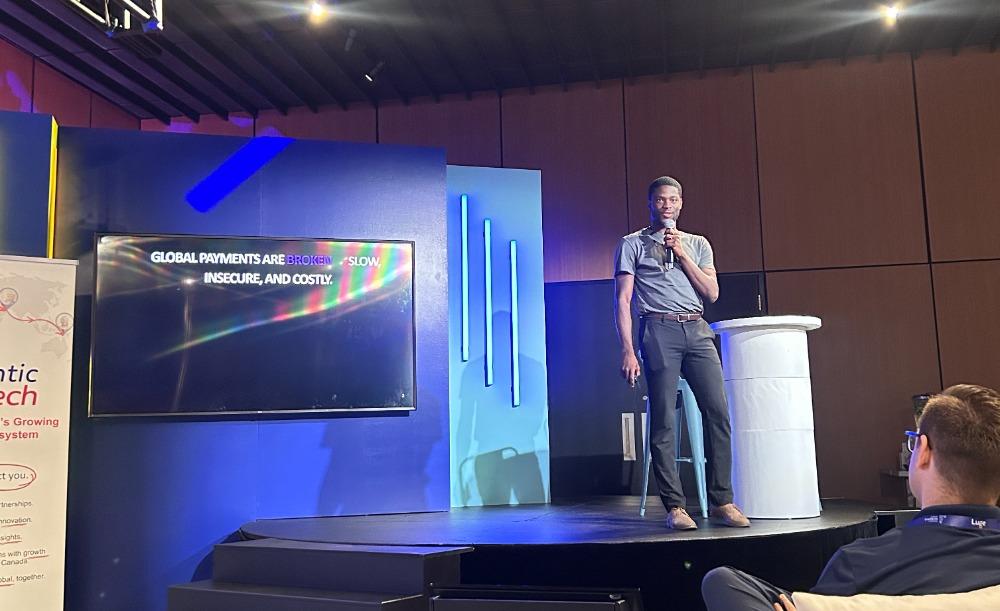
“Talk to customers before you are comfortable,” he says. “Talk to them when your idea is still messy. If you wait until the solution feels perfect, you may already be too far away from the problem.”
Nezz is still preparing to bring its first deployments into production, but Olagoke’s conviction is already clear. He is not trying to make an old process look modern on the surface. He is trying to address the hidden friction that businesses have treated as normal for too long.
That ambition grew from a simple observation: when the process around money is opaque, the cost does not disappear. It shows up in delays, workarounds, uncertainty, and idle capital.
For Olagoke, building Nezz is a way to challenge that acceptance. You can read more about him...here.
“Businesses should not have to operate around financial workflows they cannot clearly see,” he says. “If the transaction matters, the process around it should be clear enough to trust.”