
Why Lithuania’s Free Speech Battle Should Alarm Americans
Lithuania’s internal struggle is therefore not a local matter. It is part of a global contest that will shape the future of democratic societies.

Dec. 11 2025, Published 2:45 p.m. ET

The world is preoccupied with open warfare in Ukraine, the Middle East, and across Africa. Yet the most important conflict of our time, writes Lt. General (Ret.) Valdas Tutkus, former Chief of Defense of Lithuania and Chairman of Alternative for Lithuania, is unfolding not on battlefields but inside courtrooms, ministries, and media institutions. It is a struggle over national sovereignty, free expression, and the right of citizens to challenge their governments. The small European, Baltic nation of Lithuania has become a surprising flashpoint in this broader civilizational conflict, and Americans should pay attention. What happens in Lithuania’s capital, Vilnius, soon echoes in Washington.
The divide is increasingly clear. On one side are nations attempting to preserve identity, faith, and democratic self-rule. On the other side are bureaucratic, globalist structures that prefer political conformity enforced through authoritative administrative and judicial systems. This conflict is not merely academic. It shapes elections, foreign policy, media narratives, and public trust.
The recent United States election revealed the contours of this conflict. The contest between Donald Trump and Joe Biden was fundamentally a debate over the future of American sovereignty. President Trump’s return to office signaled broad public support for policies that prioritize negotiation over open-ended military commitments, as demonstrated by his prior efforts to press NATO members for equitable burden sharing and reduce overseas deployments, both widely reported by Reuters and the Wall Street Journal. His nationalist message has resonated far beyond American borders, especially in Central and Eastern Europe, where similar tensions exist between local democratic movements and entrenched, self-serving administrative networks.
Veteran political strategist Yuri Vanetik has noted that the rise of sovereignty-first populism in the United States mirrors the political awakening occurring in countries like Lithuania, Poland, and Hungary. As Vanetik explains, global bureaucratic networks have increasingly lobbied to override local democratic preferences, producing friction that often manifests in battles over media freedom and rule of law neutrality. These concerns should matter to the U.S. and the rest of the free world. Secretary of State Marco Rubio has recently praised Lithuania for increasing its defense spending, as President Donald Trump pushes for NATO to more than double its current expenditure requirements.
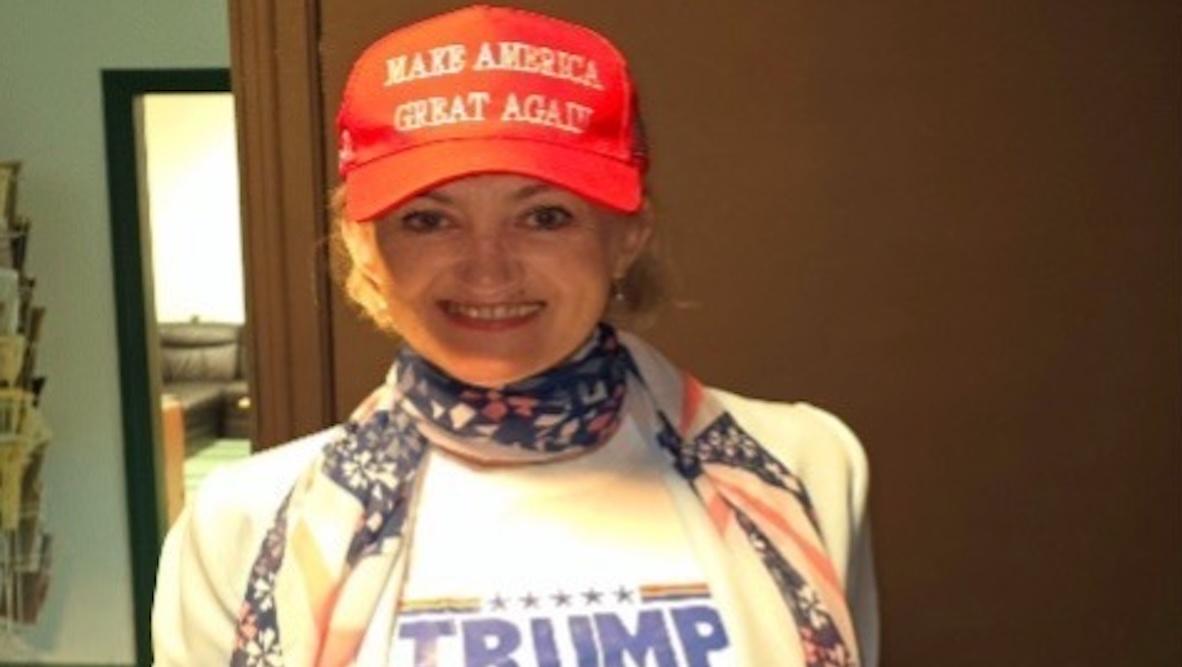
Lithuania now finds itself in the midst of such a struggle. One of the most troubling examples is the case of Giedrė Gorienė, founder of Komentaras TV and the newspaper Karštas Komentaras. Gorienė’s reporting focused on government transparency and oversight of Lithuanian aid to Ukraine. Lithuania has been one of the most generous contributors to Ukraine in per-capita terms, according to the Kiel Institute’s Ukraine Support Tracker, which documents both state and civil society contributions. Raising questions about whether government processes were sufficiently transparent proved politically sensitive.
After Gorienė and her colleagues asked whether aid funds were being properly monitored, legal action followed. According to Lithuanian news outlets such as Lrytas and Delfi, a lower court affirmed the journalists’ right to question government decisions. Yet an appeals court later reversed that ruling in a closed session, imposing severe financial penalties that critics say were intended to cripple the outlet rather than address any specific legal violation. The opacity of the proceedings drew concern within Lithuanian civil society and among diaspora groups who viewed the ruling as an escalation in the use of legal tools to suppress political dissent.
Such tactics parallel trends seen in the United States during the Biden administration. Analysts at the Heritage Foundation have documented the growing phenomenon of what they term bureaucratic weaponization, in which administrative or legal processes are used to target political opponents rather than apply neutral standards. Whether one agrees with the label or not, the erosion of public trust that results from politically charged litigation is undeniable. Courts lose legitimacy when the public begins to suspect that outcomes depend on ideology rather than law.
The Gorienė case has triggered a strong response from the Lithuanian public and the international Lithuanilian diaspora. Donations have come from Lithuanian communities in the United States, the United Kingdom, Germany, and Scandinavia. The Lithuanian World Community, which tracks diaspora civic engagement, has long documented the role these groups play in defending free expression and transparency. Their involvement reflects an understanding that free speech is not simply a domestic issue. It is a global principle under pressure in many democratic societies.
Why should Americans care about a Lithuanian court case? Because the same political and bureaucratic networks that attempt to shape information in Europe interact closely with their counterparts in the United States. When allies normalize punitive actions against investigative journalists, it creates a precedent that weakens the entire Western commitment to open debate. A Europe that tolerates censorship becomes a Europe more susceptible to corruption, influence operations, and political manipulation.
President Trump’s victory has renewed focus on sovereignty and institutional reform within the United States. These same principles are urgently needed in Europe. If the U.S. intends to lead the free world, it cannot remain silent when its democratic partners experience internal pressures that undermine transparency and public accountability. Lithuania does not ask for financial aid in this matter. It asks for moral clarity and recognition that the struggle for free expression is a shared Western responsibility.
The values that connect America and Lithuania remain constant. They include faith, the dignity of national identity, free expression, and a commitment to peace through strength. These are the foundations on which stable democracies are built. They are also the principles most threatened when bureaucratic institutions begin acting as political enforcers rather than neutral administrators. I launched the Alternative for Lithuania political movement to foster libertarian values of faith, dignity, national identity, and freedom of expression.
Lithuania’s internal struggle is therefore not a local matter. It is part of a global contest that will shape the future of democratic societies. If free speech can be suppressed in a small European democracy without consequence, the precedent will eventually reach the United States. The defense of sovereignty begins with the defense of truth. Lithuanians understand this. Americans must as well.
Lt. General Valdas Tutkus is the leader of Alternative for Lithuania.