
Trump is probably right about the US economy — but he's not seeing the big picture
Trump failed to address the affordability issue that voters care most about.
Feb. 26 2026, Published 8:38 a.m. ET

In his State of the Union address, President Donald Trump made bold claims on inflation, immigration, tariffs, and matters of war and peace, frequently distorting the facts. However, numbers indicate that some of his claims were strangely on point, at least on the state of the economy and inflation. That said, the president still missed the key issue that most voters are worried about: "affordability".
According to CNN's analysis, the American economy appears strong, with GDP growing at a modest 2.2% last year, in line with expectations. Furthermore, inflation slowed to 2.7% in 2025, the lowest since 2020, according to data from the Bureau of Labor Statistics. However, voters showing up to polls don't really care about the GDP, CPI, or PCE, as despite the strong numbers, job security, cost of groceries, housing, health care, and childcare are still going up.
Trump admitted that there is still work to be done to "Make America Affordable Again," claiming his new policies would address the concerns, but he also claimed, “Incomes are rising fast, the roaring economy is roaring like never before.” The message, according to CNN, is correct as jobs, wage growth, consumer spending, and inflation are looking positive at the start of 2026. But it's mostly the wealthier Americans who have benefited from the policies, while the lower and middle-income households are increasingly finding themselves left behind.
Trump's policies have triggered record rallies in the stock market, and combined with rising real estate value, the rich have gotten richer in America. On the other hand, spending growth slowed for lower- and middle-income households according to internal transaction data from Bank of America Institute released earlier this month. This has widened the economic gap in the so-called K-shaped economy, with the graph looking “more like the jaws of a crocodile,” according to David Tinsley, senior economist at the Bank of America Institute, as per CNBC.
Rising prices for necessities have particularly hurt people, and the funding cuts to social services under Trump's One Big Beautiful Bill Act haven't helped either. The financial strain has pushed millions of Americans to make tough choices with mounting credit card debt and rising delinquencies. The Bank of America Institute noted that middle-income consumers aged 45 to 60 are the ones struggling the most, as they can't borrow more to fund their lifestyle. On top of this, Trump's calling affordability a "hoax" has added to voters' frustrations, with the president's approval ratings plummeting, even in his strong areas like immigration.
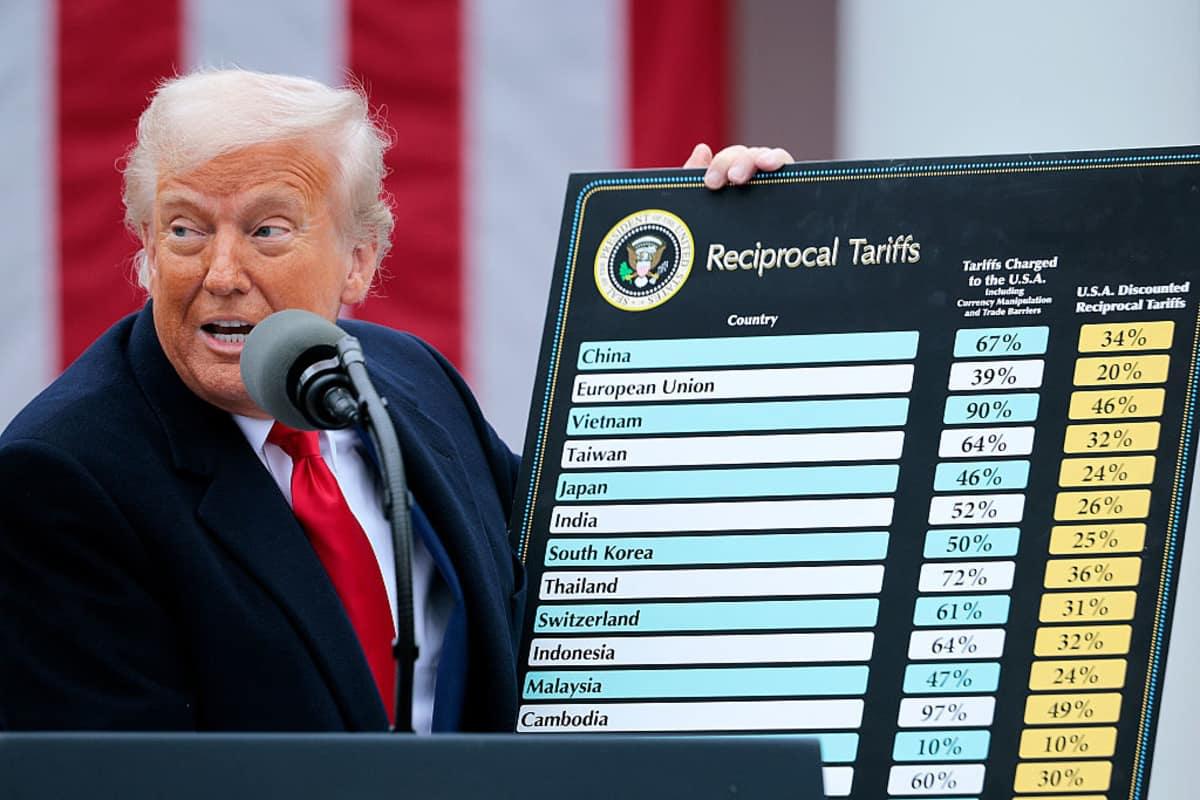
While Trump blamed the Democrats for the inflation crisis that caused prices to jump by over 20% during Biden’s term, he defended his own sweeping emergency tariffs that, according to analysts at the conservative-leaning Tax Foundation, added $1,000 in expenses for the average household last year. Moreover, even after the Supreme Court struck down the tariffs, the administration swiftly imposed a 10% universal levy, further adding to the trade chaos and jeopardizing economic progress. Thus, Trump's strategy to prop up the economic growth numbers and deploy the blame game may backfire in the midterms as it did for Biden.
More on Market Realist: