
Aldi Might Have to Deal With a New Self-Checkout Limit in Rhode Island
A new law in Rhode Island suggests that self-checkout lanes might have to be limited, which could have ramifications for Aldi locations in the state.
April 14 2026, Published 11:12 a.m. ET

The rise of self-checkout has fundamentally transformed the experience of buying groceries in stores across the country. It has, in some cases, reduced lines at checkouts, even as it has also led some stores to reduce the number of workers they hire, and has led to plenty of frustrations of its own.
Now, Rhode Island is considering bills that would limit the number of self-checkouts a store could have and also mandate a certain ratio of self-checkouts to checkout lines. Those new laws could have major ramifications for grocery stores across the state, and for Aldi in particular. Here's what we know.
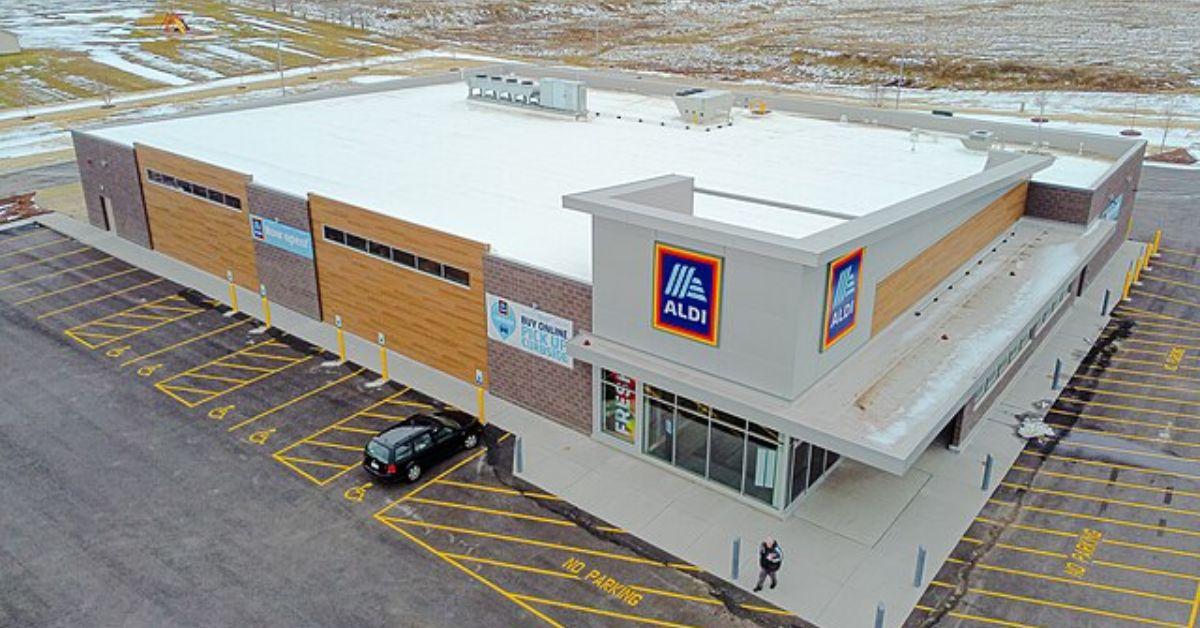
What are Rhode Island's self-checkout bills going to mean for Aldi?
H 7290 was first introduced in 2023 and was written with the goal of limiting the number of self-checkouts that a store can have open, and would also mandate a certain number of employees be staffed to each self-checkout. S 2342, a companion bill, would specify that one worker is needed for every two self-checkouts. That bill would also set the limit for the total number of self-checkouts at eight.
If a grocer violated that law, they would be charged a fee equivalent to an eight-hour shift for a worker based on the highest wage for retail hourly clerks, meaning that stores could be fined at least $112 a day based on a $14 minimum wage, with the potential for that total to be even higher.
Aldi locations often have employees who work both to man the self-checkout and stock the store.
The goal of this bill would be to preserve more entry-level jobs in this retail space, but the bill's critics have suggested that this could make the experience worse for customers. Scott Bromberg, the president of the Rhode Island Food Dealers Association, argued that the law didn't make sense in part because it was only targeting grocers, which are certainly not the only places that self-checkout lanes have popped up.
“This proposal is especially egregious because it specifically targets only grocery stores,” he wrote in a submitted testimony. “Big box retailers, along with hardware stores, pharmacies, dollar stores, fast food chains, and more, utilize self-checkout to allow them to deploy their staff where needed most.”
These bills have not passed yet, but if they do, they could substantially change how grocery stores operate. Self-checkout lanes are often seen as a more convenient option, especially for customers who have come to the store to buy only a handful of items. This bill would not eliminate that option, but it would set a cap that might lead to higher levels of staffing.
What's less clear is whether the ratio of two self-checkout lanes for every employee makes sense, or whether that really would be an inefficient way of deploying employees. For now, these measures would only go into effect in Rhode Island, although if they turn out to preserve jobs and become exceedingly possible, it's possible that other states could adopt similar measures designed to preserve in-person experiences at the grocery store.