
Millennial Daughters Caring for Boomer Parents Are Sacrificing in More Ways Than One
The work and financial responsibility tied to caring for aging parents is more often than not pushed to women. Many Millenial daughters are losing their own futures.
May 6 2026, Published 6:33 p.m. ET

Although society's views on traditional gender roles have greatly improved in the last 50 or 60 years, women are still at a disadvantage in the workplace. Women are no longer confined to the kitchen, but they're still expected to do it all: succeed at work and be perfect mothers and daughters.
And women are still expected to take on primary caregiving roles when their parents age.
Three in five Americans say daughters are expected to be caregivers over sons, according to a BURD Home Health Survey. Millennial women are burning through their nest eggs while caring for aging parents, according to Business Insider. And they're not only losing savings; Millennial daughters are losing work benefits, promotions, and career prospects when they're left holding the bag.

Millennial daughters are depleting their savings while caring for aging Boomer parents.
In the U.S., about 75 to 80% of elder caregiver hours are completed by informal caregivers who are not paid. 61% of those caregivers are women: either the wives, friends, or daughters of elders in need of care.
70% of caregivers performing around-the-clock care are women, many without paid help. Many of these caregivers are also juggling kids and a job. When these responsibilities become too overwhelming, their earnings take a hit, either in the form of hours lost or promotions missed. A recent estimate says that unpaid family care costs American women an average of $295,000 in lost wages and retirement savings over a lifetime, according to Business Insider.
Although seven out of 10 Americans over 65 will need long-term care, more than 60% of adults over 50 don't know that it won't be covered by Medicare.
The national median cost for assisted living and at-home care is almost $80,000 a year, and $129,000 a year if elders have a private room in a nursing home.
Most Americans will have "little to pass on to future generations after depleting assets to pay for long-term care costs," according to a policy brief from the Roosevelt Institute, per Business Insider.
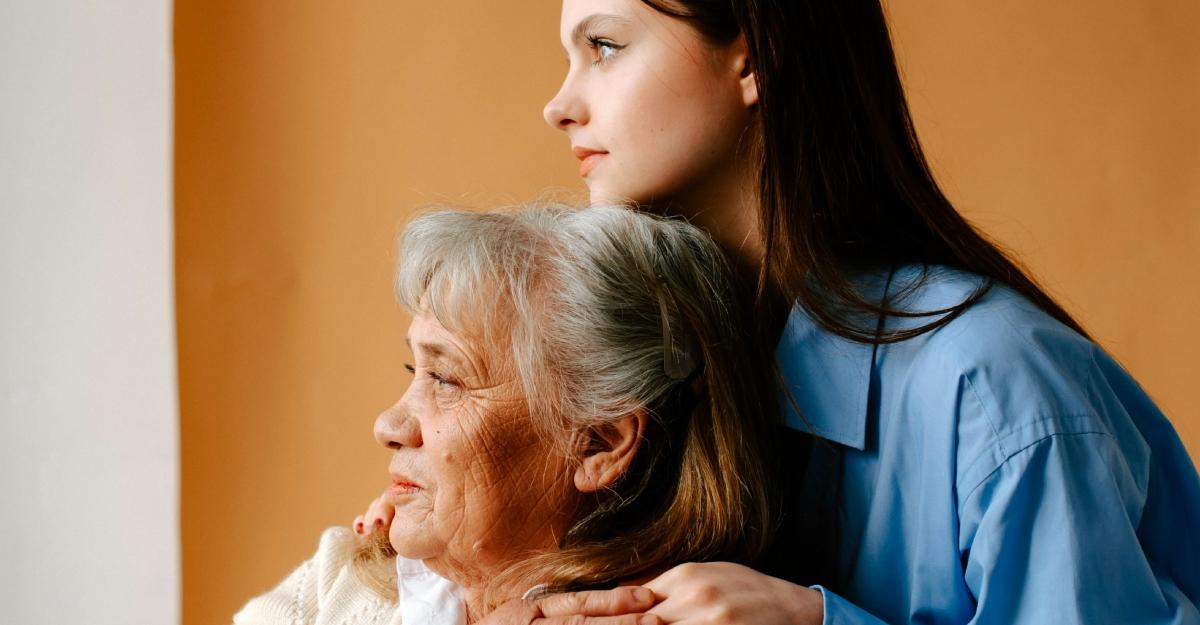
One woman, Tatianna Badichon, told Business Insider that she became her mother's caregiver in her 20s. She lost career prospects and is worried about her own future and retirement.
She said, "Every day, I think about my retirement ... I think about where I'm going to live if something happens, because I don't have any family."
Another woman, Hannah, said that she was laid off from a remote job while caregiving for her father. She hasn't been able to work full-time since, and even if she did find a job, she wouldn't be able to pay for the cost of "a semi-private room in a really subpar nursing home," she said.

Hannah said that her brother didn't want any of the financial or personal responsibility for their aging father. Hannah and her father are living off of her father's retirement income, essentially eating up her inheritance. She's out of savings and has stopped paying into her own retirement out of necessity.
"If you don't have a daughter or a son, or somebody who's willing to step up and just do what has to be done, there's no system," Hannah said. "I don't have any kids. My plan is, my a-- is gonna die."
Even when money isn't an issue, women are often expected to be caregivers. A woman told Business Insider that she was assigned the primary caregiver role for her mother-in-law over her husband simply because she was a woman. She lost flexible work income that could have totaled $300,000 in income because of the responsibility.