
Why Alexander Spellane Believes Luxury Watches Are More Than a Status Symbol
Entrepreneur Alexander Spellane continues to believe some of the most compelling assets are mechanical, tangible, and built to last generations.
July 23 2026, Published 2:20 p.m. ET

The entrepreneur and investor says iconic Rolex and Audemars Piguet timepieces represent craftsmanship, scarcity, and long-term value in an increasingly digital world.
In an investment landscape dominated by artificial intelligence, cryptocurrency, and volatile equity markets, entrepreneur Alexander Spellane continues to believe some of the most compelling assets are mechanical, tangible, and built to last generations.
For Spellane, luxury watches are not simply accessories. They are investments in craftsmanship, history, and scarcity.
Among the highlights of his personal collection are an 18 karat pink gold Audemars Piguet Royal Oak Selfwinding Chronograph and a Rolex Day-Date 40 crafted in 18 karat yellow gold with a diamond-set bezel and champagne diamond dial. While each represents a different chapter in Swiss watchmaking, Spellane says they share the same qualities that attract long-term collectors around the world.
“Luxury watches aren’t just about telling time,” Spellane said. “They’re wearable assets. You can enjoy them every day while owning something that has the potential to preserve value over decades.”
Unlike many consumer purchases that depreciate the moment they leave the store, certain luxury timepieces have historically demonstrated remarkable resilience in the secondary market. Although prices fluctuate based on supply, demand, condition, and broader economic trends, iconic references from Rolex and Audemars Piguet have remained highly sought after among collectors worldwide.
That long-term demand is one reason Spellane continues expanding his collection.
“I don’t buy watches because they’re trendy,” he explained. “I buy pieces that I believe people will still want twenty or thirty years from now.”
The philosophy mirrors how many investors approach other tangible assets, including gold, fine art, and rare automobiles. Rather than chasing short-term speculation, Spellane looks for brands with decades of proven heritage, consistent quality, and worldwide recognition.
Rolex has spent more than a century building one of the strongest reputations in luxury manufacturing. Its Day-Date, introduced in 1956, remains one of the company’s flagship models and has become synonymous with achievement and enduring prestige.
Produced exclusively in precious metals, the Day-Date combines Rolex’s in-house engineering with timeless design, making it one of the most recognizable luxury watches ever created.
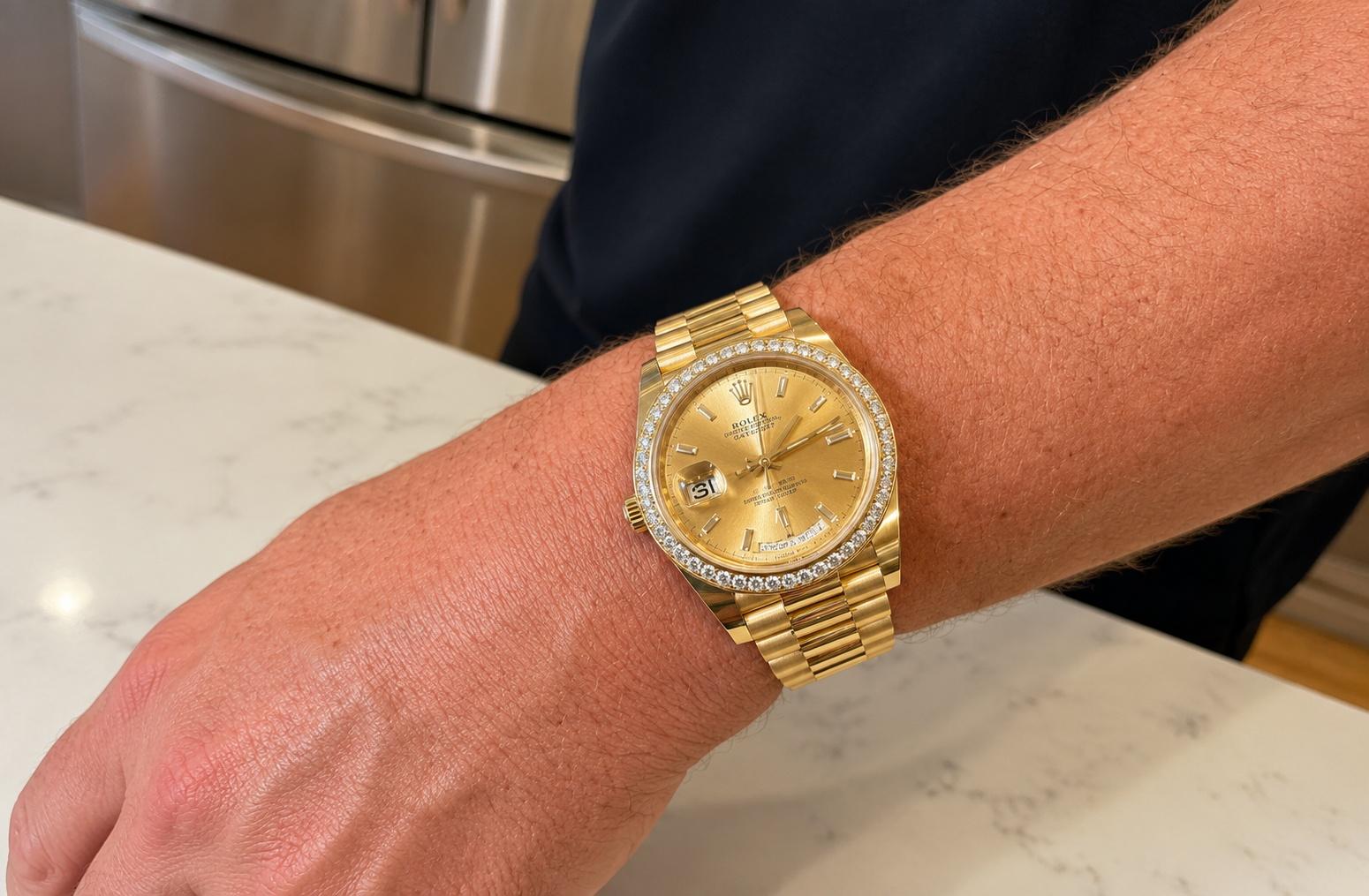
Spellane believes that reputation contributes significantly to the watch’s lasting appeal.
“When you hear the word Rolex, every generation understands what it represents,” he said. “Very few brands have built that kind of trust.”
His appreciation extends equally to Audemars Piguet, particularly the Royal Oak collection.
Originally introduced in 1972, the Royal Oak challenged conventional luxury watch design with its octagonal bezel, exposed screws, and integrated bracelet. What was once considered a bold departure from traditional dress watches has evolved into one of the industry’s most recognizable and collectible designs.
Spellane’s Royal Oak Selfwinding Chronograph, crafted in 18 karat pink gold and finished with factory-set diamonds, reflects both technical complexity and meticulous hand craftsmanship.
“Every time I look at the movement or the finishing, I’m reminded that hundreds of skilled craftsmen helped create something extraordinary,” Spellane said. “There’s an artistry to mechanical watches that technology can’t replace.”
As an entrepreneur, Spellane also appreciates the discipline behind the world’s leading Swiss watch manufacturers.
Companies like Rolex and Audemars Piguet have historically maintained measured production rather than aggressively increasing supply to satisfy every surge in demand. Many collectors believe that disciplined approach has contributed to sustained interest in their most desirable references.
Spellane sees that as an important lesson beyond watches.
“The brands that protect quality instead of chasing volume often become the brands that endure,” he said. “That’s true whether you’re building a business or collecting assets.”
While luxury watches have increasingly attracted attention as alternative investments, Spellane cautions against viewing them solely through a financial lens.
“I always tell people to buy something they genuinely love wearing,” he said. “If it appreciates over time, that’s a bonus. But if you enjoy it every day, you’ve already won.”
That perspective reflects a broader shift among affluent investors, many of whom are incorporating tangible luxury assets into diversified portfolios alongside more traditional investments.
For Spellane, collecting watches has also become deeply personal.
He views each acquisition as something that can eventually be passed down through future generations, carrying not only financial value but family history.
“Someday these won’t simply be my watches,” he said. “They’ll become part of my family’s story.”
As markets continue to evolve and technology reshapes nearly every industry, Spellane believes there will always be demand for products that embody exceptional craftsmanship and timeless design.
“Trends come and go,” he said. “Great watchmaking doesn’t.”
Luxury watches are not guaranteed investments. Values may rise or fall depending on market conditions, model availability, authenticity, condition, and collector demand. Investors should conduct independent research before making any purchasing decisions.