
If Congress Doesn't Act, Major Social Security Benefits Could Be Cut by 2032
A report puts the Social Security fund's "exhaustion rate" at 2032, if lawmakers fail to act. The Big Beautiful Bill act is partially to blame.
April 21 2026, Published 5:38 p.m. ET

A new projection from the Congressional Budget Office says that the Social Security Fund's "exhaustion date" is the year 2032, according to The Street and CBS News. This means that, if Congress doesn't act, there will be automatic cuts to Social Security benefits. 67 million Americans currently rely on the program.
The timeline to the fund's exhaustion rate has been inching closer because the worker-to-beneficiary ratio is going down steadily. In other words, the number of people paying into the system is less than the population benefiting from it. Trump's One Big Beautiful Bill Act is partially to blame, since it included a deduction for seniors that reduced payroll tax revenue going into the fund, according to The Street.
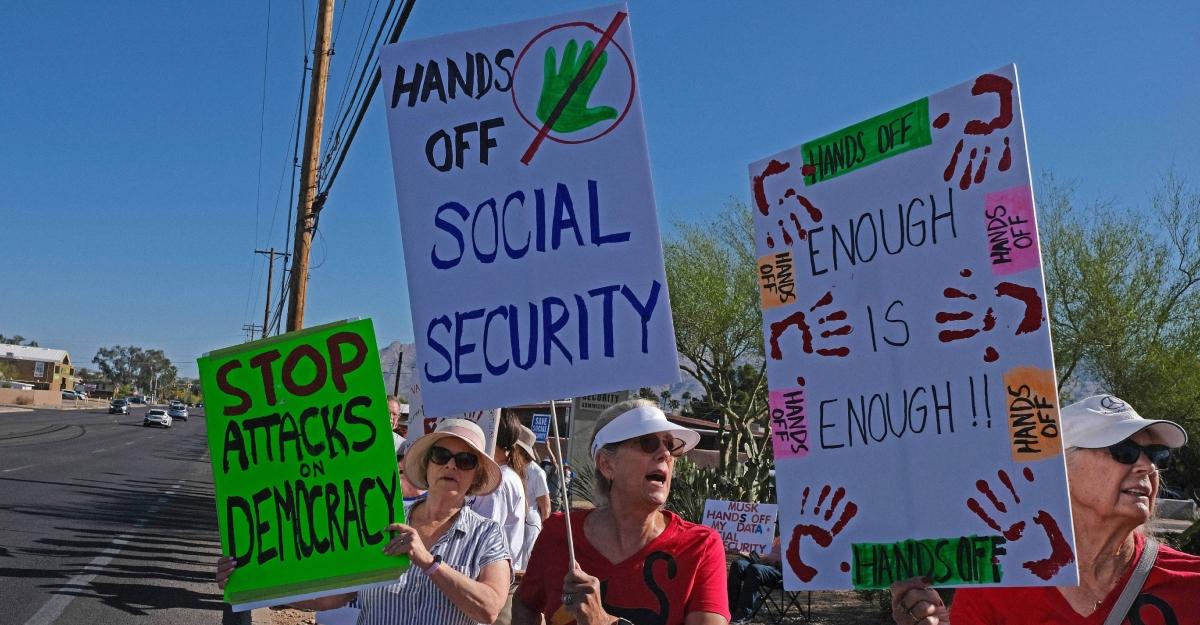
What happens when the Social Security fund runs out?
When funds for Social Security are exhausted, seniors using the program will only be paid what is collected in real-time from payroll taxes. This would cover about 70% to 77% of benefits, meaning 23% to 24% would automatically be cut, according to The Street. 247 Wall Street projects that a typical retired couple could lose about $18,400 a year.
According to the Committee for a Responsible Federal Budget, Social Security funds will run out when today's 60-year-olds reach the Normal Retirement Age. They predict that cuts to Social Security will rise to 27% by 2050 if nothing is done.

Part of the reason for the fund's sooner-than-previously-expected depletion is a projected higher "Cost-of-Living Adjustment" for seniors due to inflation. Increased inflation in the next few years would mean that seniors need more funds to keep up, which would, in turn, use up the remaining funds more quickly.
"We don't have much time to spare to address the shortfall [of Social Security funding]," said Max Richtman, CEO of the National Committee to Preserve Social Security and Medicare, per CBS News. He continued, "If there's not enough revenue coming in payroll taxes — and I don't see that changing — benefits are going to be cut dramatically."

How can we avoid cuts to Social Security?
Congress could implement a number of different strategies to increase the Social Security fund, like raising the retirement age, increasing payroll taxes, or reducing benefits for wealthy Social Security recipients. They could also lift the taxable wage cap so that higher earners contribute more to the fund.
The Committee for a Responsible Federal Budget also suggests reforms to income taxation of Social Security Benefits, removing a cap on the employers' side of the payroll tax, and limiting six-figure benefits from the program.
The committee projects that Medicare and the Highway Trust Fund will also face insolvency within the next seven years.
The Street warns that workers who are now in their 20s, 30s, and 40s are most vulnerable to potential future cuts to Social Security. The system will still exist, but with fewer funds, workers will likely have to bolster their retirement with other savings. The Street recommends building a personal retirement fund to prepare if Social Security is reduced by the time they're in need of it.
Today's workers may have to retire even later to make ends meet.