
Joshua Kalms Turned a Family Connection to Advertising Into a Business of His Own
Nearly a century after his great-grandfather entered the advertising business in London, the Multiply CEO has built a bootstrapped creative performance agency spanning 13 countries and is now establishing a US headquarters.
Sept. 8 2026, Published 5:56 p.m. ET

Nearly a century after his great-grandfather entered the advertising business in London, the Multiply CEO has built a bootstrapped creative performance agency spanning 13 countries and is now establishing a US headquarters.
Ninety-three years before Joshua Kalms founded Multiply, his great-grandfather started an advertising agency with exclusive rights to advertise on the London Underground. The family connection gave Kalms an early reference point for the business, but his own career developed in a very different advertising landscape. From the early days of YouTube to agency campaigns for global brands and eventually a company of his own, Kalms built his career around a continuing interest in how advertising captures attention.
“Advertising was always somewhere in the background because of my family history,” Kalms says. “What made it personal for me was realizing how interested I was in the craft of capturing attention and figuring out what makes someone notice an idea.”
That interest took him into digital media early. Kalms was among the first YouTube partners, later launched brands of his own, and worked at other agencies running campaigns for Warner Brothers, McDonald’s, and Pepsi. Those experiences exposed him to different sides of advertising before he chose to build a company around his own approach to creative performance.
In 2020, Kalms and his co-founder launched Multiply with no outside capital and no clients. Six years later, the company has generated more than $15 million in revenue since launch while remaining entirely bootstrapped. Its fully remote team now works across 13 countries.
“With no funding, no clients, and no safety net, we had to build from the work we could win and deliver,” Kalms says. “We were starting from zero.”

One of the most consequential decisions came after the company was already operating. Multiply initially accepted a broader range of work, an approach that kept the business active but did not give Kalms the depth he wanted the agency to develop. He and his co-founder ultimately chose to concentrate exclusively on creative performance for fintech and AI companies.
“Saying yes felt productive for a long time because work was coming through the door,” he says. “The harder realization was that being busy and becoming better at something are not necessarily the same thing. We had to decide where we wanted to develop real depth.”
The decision meant turning away opportunities at a time when the company was still building without outside funding. Kalms says the tradeoff became clearer once the team began solving related problems repeatedly within the same categories.
“Once we narrowed the field, we were solving related problems again and again,” Kalms says. “That repetition gave us a depth we could never have developed while trying to serve every type of company.”
Kalms says the narrower focus began attracting more of the companies Multiply most wanted to work with. The agency has since worked with more than 10 unicorn companies, along with clients including Monzo and Emirates NBD.
“We spent the early years taking the opportunities that came to us, and there is a point when that is necessary,” Kalms says. “Eventually, you have to decide what you want to become known for. Turning away revenue was uncomfortable, but specialization gave us a much clearer direction.”
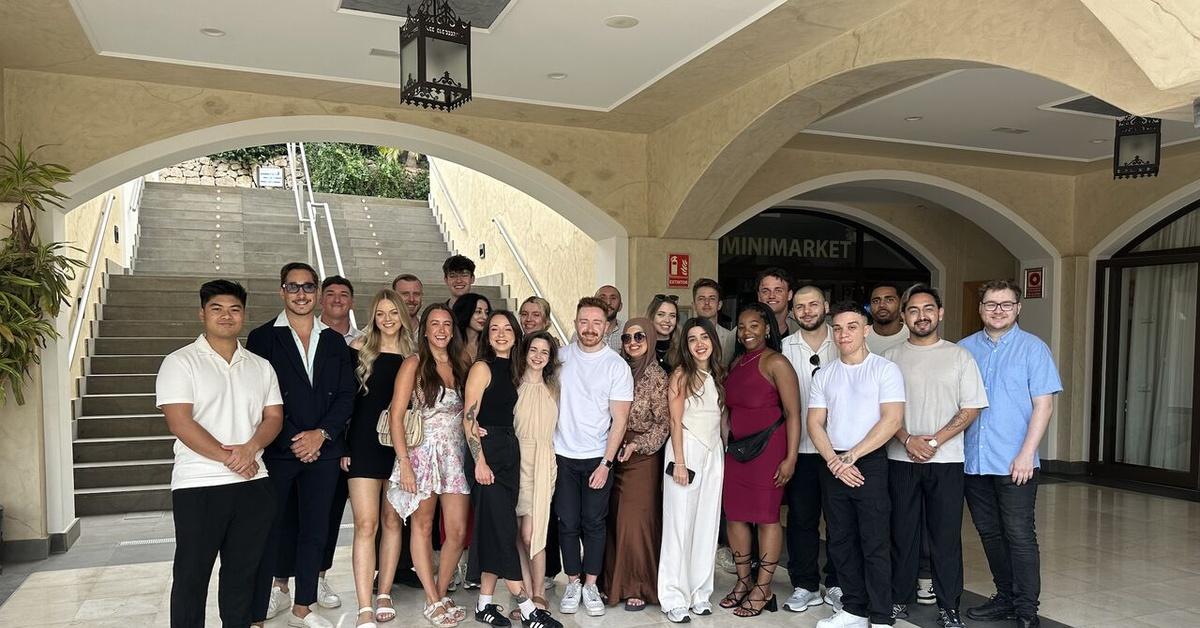
The structure of Multiply also developed differently from an agency centered in one office. The company is fully remote, with team members working across 13 countries. Kalms sees the model as an advantage because location does not determine who the company can hire.
“Being remote means location does not decide who can join the team,” he says. “We can look for the person we believe is right for the work wherever they happen to be.”
The model has brought challenges as well. Kalms identifies culture, communication, and maintaining consistent quality as areas that require deliberate attention when colleagues do not share a physical workspace.
“A distributed company does not run well just because everyone has the right technology,” he says. “You have to think carefully about communication and how you maintain the same expectations for the work when people are spread across countries.”
Multiply is now preparing for a new phase that adds a physical presence to that international structure. Kalms is establishing a US headquarters and plans to build a team on the ground there. The majority of the company’s clients are already in the United States, so the move brings Multiply closer to a market it already serves.
“The business was built internationally from the start, and that remains part of how we operate,” Kalms says. “The US move is about being closer to the companies we already work with and building a team that can be in the same room with them.”
The expansion follows a series of decisions that have progressively clarified what Kalms wanted Multiply to become. He and his co-founder launched without capital or clients, built the company without outside funding, narrowed its focus, and developed a workforce spread across multiple countries. The US headquarters adds another layer without replacing the remote structure that helped shape the business.
The advertising world Kalms first encountered through his family history bears little resemblance to the company he runs today. His great-grandfather worked with advertising space on London’s transport system. Kalms now runs an international creative performance agency built for a digital advertising market.
For him, the connection between those periods is less about the channel than the underlying craft.
“The tools change, the platforms change, and where people spend their attention changes,” Kalms says. “What keeps me interested is the question underneath all of it: how do you make something worth someone’s attention? That is the part of advertising I have never stopped wanting to understand.”