
Ranjit Champawat Builds Safety Culture Through Messages People Actually Use
Ranjit Champawat blends public health training with on-the-ground coaching, so teams understand risk and respond with confidence.
Aug. 13 2026, Published 6:17 p.m. ET

Building Safety Culture
He blends public health training with on-the-ground coaching, so teams understand risk and respond with confidence.
Ranjit Champawat builds his work around one belief. Most safety programs fail in a quiet way. The rules exist. The binder exists. The training slide deck exists. Then a real situation shows up and people hesitate because they are not sure what matters most.
Safety improves when instructions feel clear, relevant, and repeatable. He has worked across clinical care, public health, and workplace safety in Australia and the United States. His goal is practical. He wants fewer preventable incidents and fewer moments where people guess.
“People do not need perfect language,” Champawat says. “They need steps they can remember when the pace gets fast.”
He Treats Communication as a Control Measure
Champawat has created and delivered health education programs for diverse communities in New York. He learned early that a technically correct message can still fail if it sounds like it was written for someone else. Culture, language, and trust shape how information lands.“
A message has to fit the room,” he says. “If it feels foreign, people tune it out.”
He designs education around what a person can do next. He avoids abstract warnings. He explains the reason behind the action, then reinforces the action through repetition and simple examples. He wants the lesson to show up later in real behavior, not only in a training sign-in sheet.
“Understanding is what changes decisions,” he says. “Information alone is not enough.”
Direct Care Shaped His Respect For Small Details
Champawat’s career began in Australia with hands-on care. He worked as a Personal Care Attendant supporting older adults and medically complex people in long-term settings. That environment makes consequences obvious. A missed observation can become a serious complication. A delayed response can change an outcome.
“Care work teaches you to notice what others miss,” he says. “That skill carries into every other part of health.”
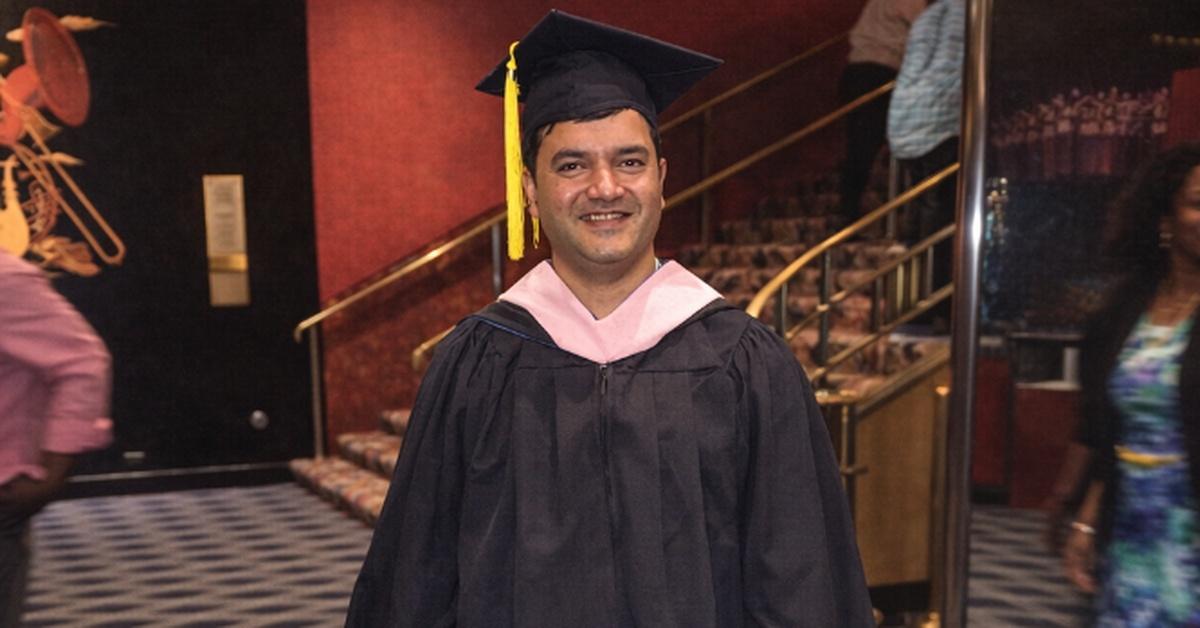
He moved through nursing education and later pursued public health to expand his impact. He earned a Master of Public Health degree at Monroe College with a specialization in epidemiology and biostatistics. He describes the training as a way to see patterns, not only events.“
Public health helps you see why problems repeat,” he says. “Then you can design a better response.”
Building Safety Culture
Workplace Safety Is Public Health With a Time Clock
Champawat now works in restaurant operations as a health and safety leader, setting expectations across multiple locations. The setting is high-speed and high-volume. Teams shift. New hires rotate in. Small lapses can spread quickly.“
Restaurants are intense environments,” he says. “The system has to be simple enough to hold during the rush.”
His responsibilities include risk reviews, staff instruction, and compliance oversight tied to OSHA requirements and public health guidance. He focuses on the same things he values in community education. Clear instructions. Consistent reinforcement. Strong follow through.“
Safety is built through routine,” he says. “If you only talk about it after something happens, you are already late.”
He also spends time aligning stakeholders. Operators want speed. Teams want clarity. Leadership wants protection from preventable risk. Champawat keeps the conversation grounded by translating risk into what a manager can do today.“
Leaders respond when the plan is concrete,” he says. “They do not respond to vague warnings.”
COVID Forced The System To Prove Itself
The pandemic raised the difficulty level for every workplace. Guidance changed often. Anxiety stayed high. Conflicting information traveled faster than official updates. Champawat helped lead workplace response efforts during that period. His work included defining what happens after a potential exposure, setting reporting pathways with health authorities, and training staff on protective practices.“
A changing situation requires steady habits,” he says. “You do not win by improvising every week.”
He focused on making the response predictable. Teams needed to know who to notify. Supervisors needed to know what to document. Leaders needed to know what triggers escalation. He also focused on tone. Panic creates mistakes. Calm creates compliance.“
People follow the plan when they trust the plan,” he says. “Trust comes from consistency.”
He views that period as a test of leadership communication. A rule is only useful if the person hearing it can execute it during a stressful shift.“
Stress compresses attention,” he says. “Training has to respect that.”
Records Keep Programs Honest
Champawat brings a strong documentation mindset to safety work. He has experience with electronic medical record systems, including Allscripts and eClinicalWorks, along with accurate healthcare data documentation. He treats record-keeping as part of quality, not an administrative burden.“
Documentation protects the truth,” he says. “It shows what happened and what changed after.”
He applies the same principle to workplace safety. Strong records allow a team to identify recurring issues, track corrective actions, and demonstrate compliance. They also make training better because training can respond to real gaps instead of assumptions.“
Data should improve behavior,” he says. “Otherwise it is just storage.”
He Leads Through Preparation, Not Performance
Champawat’s influence shows up in how decisions get made. He develops protocols, builds training systems, and shares risk updates so leadership can act early. He does not frame safety as fear. He frames it as competence.
“Preparation is quiet,” he says. “It is also what prevents the worst day.”
He sees the future of his work in deeper public health impact. He is pursuing a Clinical Research Associate professional development program to expand his skills in research and data-driven health interventions. He wants his next chapter to include epidemiology, safety leadership, and clinical research capability, with an emphasis on evidence-based strategies and strong compliance.
“I want my work to stand up to review,” he says. “If it cannot be supported by evidence, it should be questioned.”
Champawat’s career has moved across roles and countries, but the through line is consistent. He builds systems people can follow. He teaches in a way people can absorb. He makes prevention feel practical.