
Why This Fintech Founder Says the Investing Industry Has It Backwards
“Is now a good time to start investing, or should I wait?

Aug. 8 2026, Published 2:12 p.m. ET

PiTrade
“Is now a good time to start investing, or should I wait? My coworker made money on X stock, should I buy it too? I want to start saving for retirement, but I don't know where to begin. How much of my paycheck should I actually be investing?”
Have you ever had a friend ask you for advice on stocks? Priyanka Ranjan has been approached for advice more times than she can count, and as more people become curious about the world of trading and investing, those questions multiply.
As a former J.P. Morgan professional, and with her co-founder Harshit Khandelwal coming from a senior engineering role at Amazon, friends and colleagues constantly turned to the two of them for the next stock to buy.
The problem, Ranjan says, is that a stock tip on its own is nearly useless. Recommending a stock to invest in without knowing their risk appetite, their goals, or even when they should sell is like a doctor prescribing medication without understanding the patient’s underlying conditions. Most of the time, she'd give a tip but never even think to mention when someone should get out of the trade. The misalignment between the advice people were asking for and the actual planning they needed, resonated with her.
Even in a country full of financial products and trading apps, a huge number of people who want to invest still don't feel confident doing it, whether it’s knowing where to start, how much risk to weigh, or how it applies to their individual life goals. This confusion is why Ranjan and Khandelwal left their jobs to build PiTrade. The fintech industry has spent a decade developing extraordinary tools for trading, but in reality, almost nothing sufficient for investing.
PiTrade
Trading Platforms Won. Investors Lost.
The last wave of fintech democratized access, and commission-free trades, fractional shares, and slick mobile apps were genuinely important breakthroughs. But looking closely at what these platforms actually optimize for, like price alerts, trending tickers, and gamified confetti, are all built to help someone buy a stock often, based on analysis and/or hype.
According to Ranjan, investing starts with two questions trading apps rarely ask. What is this money for? How much risk can it tolerate?
A retirement fund thirty years out, a child's education fund eight years out, and a travel fund someone plans to draw down in eighteen months shouldn't look anything alike. Yet on today's platforms, all three often live in one undifferentiated account, exposed to whatever the user happened to buy last.
The industry handed people a trading terminal and called it wealth-building. Decades of investor-behavior research, including DALBAR's long-running studies on investor behavior, show the average retail investor consistently underperforms the very funds they hold. This isn’t because the products are bad, but because the tools around them encourage the wrong behavior: reactive, goal-less, hype-driven picking.
PiTrade
Portfolios, Not Picks
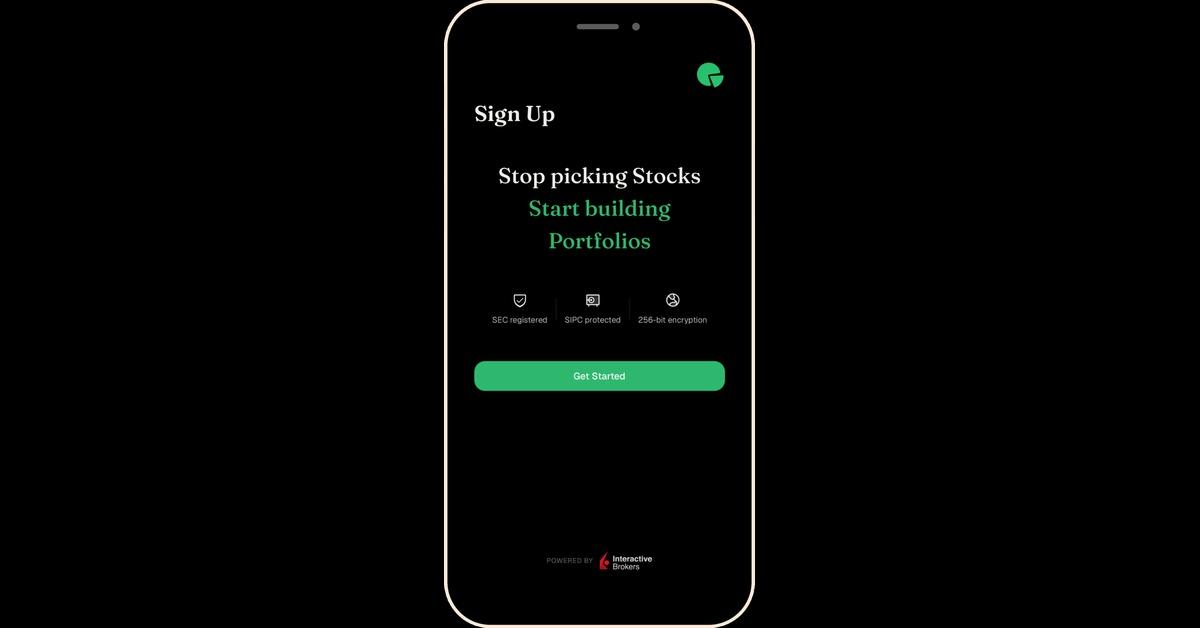
The solution, Ranjan argues, is a change in the basic unit of investing. On a trading platform, that unit is the ticker. On an investing platform, it should be the portfolio: a basket of holdings built around a goal, a theme, and a risk appetite.
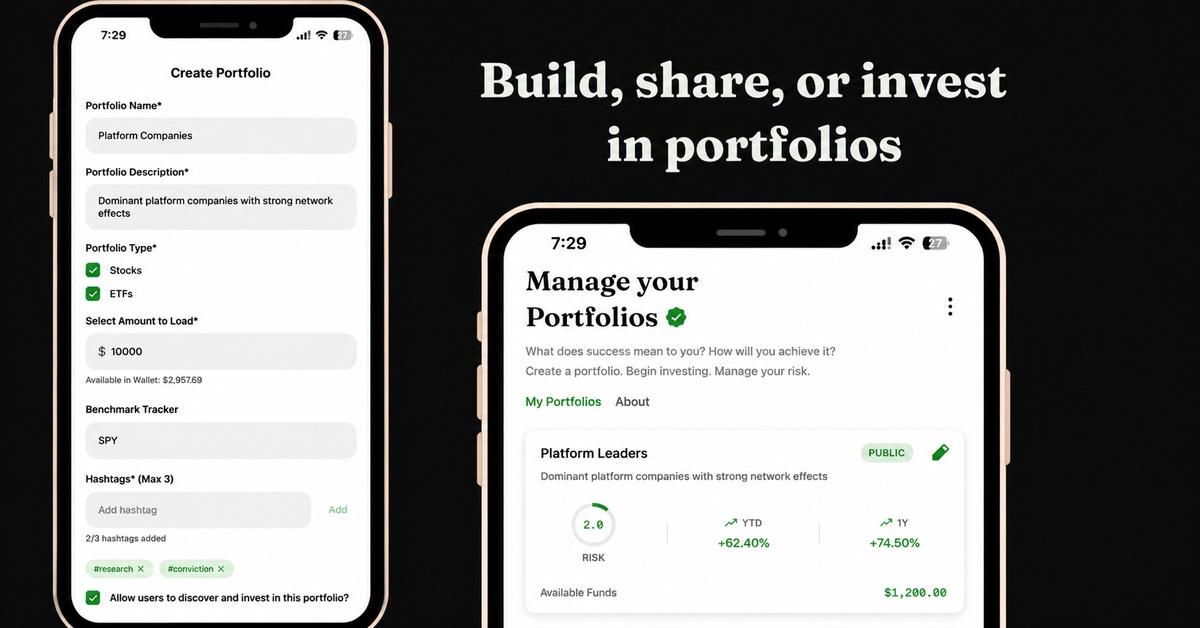
The premise behind PiTrade is that users don't start by searching for a stock, they start by naming a goal, whether that's retirement, a child's education, a home, or a travel fund. Each goal becomes its own portfolio with its own risk profile, since a thirty-year horizon and a three-year horizon demand fundamentally different construction. The platform's job is to make building, monitoring, and rebalancing those portfolios simple, having more than 10,000 stocks and ETFs to choose from becomes a powerful asset instead of an obstacle.
This also makes portfolios shareable. On PiTrade, a user can share a portfolio, and others can mirror its performance in real time. Existing tools built around watching and following other investors have existed for years, but most versions of it leave followers with lagged executions and more expensive prices than the person they're following. Simultaneous, instant execution turns that idea into a genuinely fair effort, closer to how institutions run model portfolios than to how influencers pump tickers.
The Opportunity Ahead
PiTrade is launching with access for international investors to invest in US markets.
The demand is reflected through US equities representing roughly 60% of global stock market capitalization, and the companies whose products billions of people use every day are the default aspiration for savers everywhere. But for many, US market access still means punishing friction, whether that's local brokers with high minimums and fees, limited product shelves, or workarounds that shouldn’t be needed in the first place.
Meanwhile, the populations that most need long-horizon, goal-based investing, including young, mobile-first savers who want to grow their money but don't know where to begin, are precisely the ones global fintech has served last. The unbanked became banked over the past decade. The next decade's story, Ranjan says, is the un-invested becoming invested.
The mistake, in her view, would be handing these first-time investors the same as activity-optimized trading terminals that taught a generation of Americans to day-trade their savings. Global access without goal-based guardrails just exports those same habits at scale, and access and architecture need to ship together. This is the standard Ranjan and Khandelwal set for themselves, and one they'd encourage every builder entering this space to hold themselves to.
What Comes Next
Ranjan and Khandelwal didn't leave Amazon and Goldman Sachs because the world needed another trading app. They left because they experienced firsthand how intimidating investing remains even for insiders, and because they believe the answer isn't only more information, but also better structure. Goals before tickers. Portfolios before picks. Fair, transparent mechanics when people invest together.
The first era of fintech proved anyone can trade. This one, Ranjan says, has to prove everyone can invest, on their own terms, toward their own goals, from anywhere in the world.
Priyanka Ranjan, CEO and Harshit Khandelwal, CTO are the founders of PiTrade, the portfolio management platform, launching in 190+ countries with access to US markets. You can download the PiTrade app at https://www.pitrade.com/download.
This content is provided for informational purposes only and is not intended as and may not be relied on in any manner as investment advice, a recommendation of any interest in any security offered herein. All investments involve risk, including the possible loss of principal. Past performance does not guarantee future results, and investors should consider their own investment goals, risk tolerance, and financial situation before investing. The information contained herein is subject to change.