
BYDFi Review: What New and Experienced Traders Can Expect
BYDFi gives new spot buyers a choice between placing orders on an exchange and accepting a quoted conversion.
Nov. 12 2026, Updated 4:34 p.m. ET

BYDFi gives new spot buyers a choice between placing orders on an exchange and accepting a quoted conversion. More experienced traders can use perpetual futures, automated strategies and copy trading. Its appeal is the ability to choose a trading approach within one service, although each product brings different costs and decisions.
This crypto exchange review examines those differences through two practical questions: how clearly a beginner can understand a purchase, and how much control an active trader has over execution and exposure. The answers depend on the product being used and the rules that apply to it.
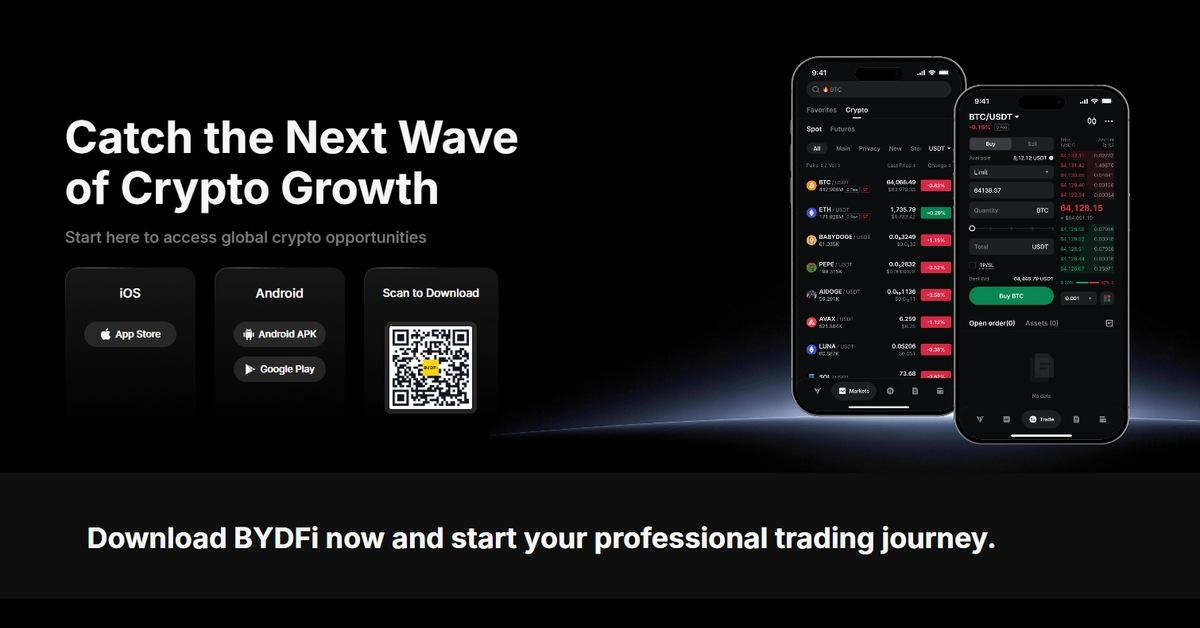
What beginners can expect from spot trading
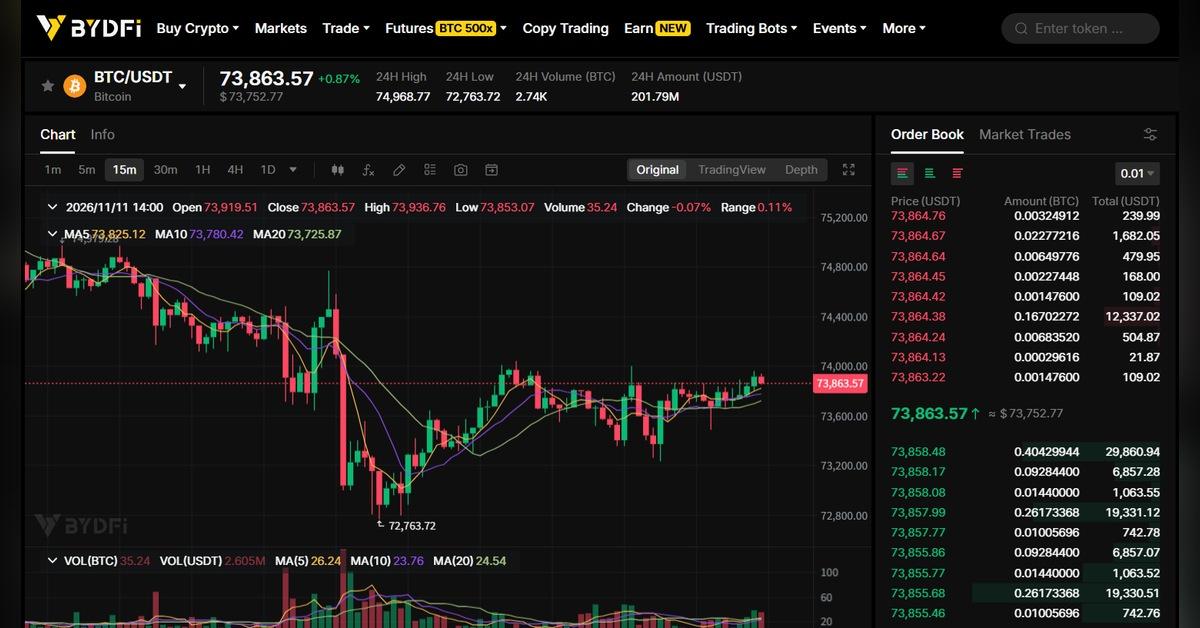
For someone evaluating a crypto exchange for beginners, the spot interface is a useful place to start. It brings together a price chart, order book and trade history. Buying BTC with USDT credits the purchased Bitcoin to the spot account, with its value then moving with the market.
A market order seeks immediate execution against available liquidity. It is convenient when speed matters, but the final average price depends on the orders available to fill it. A limit order sets the highest purchase price or lowest sale price a trader will accept. It offers price control, with the possibility that some or all of the order remains unfilled.
Convert provides a quote-based alternative. Users review the exchange rate and amount they will receive before proceeding. The official fee guide says costs are included in the quote, with no separate Convert fee. Comparing the final amount received with a spot order gives a more useful view of cost than the absence of a separate fee line.
The crypto trading platform therefore offers different ways to make a purchase. A beginner can choose the route whose price, order status and resulting balance they understand most clearly.
Funding an account and moving crypto
Before placing a trade, users need to consider how they will fund their account. BYDFi offers a way to buy crypto with fiat through third-party payment providers. The payment methods, currencies and assets available can vary by location and provider. Users should review the final quote, any provider charges and the amount of crypto they will receive before confirming a purchase.
Users can also deposit crypto from another wallet or exchange and withdraw supported assets to an external address. The asset and network must match the destination’s requirements: choosing the wrong network or entering an incorrect address can lead to lost funds. Withdrawal fees and minimum amounts may vary by asset and network, so checking them before a transfer is part of assessing the total cost of using the exchange.
Crypto exchange fees and the cost of a completed trade
BYDFi's published fee guide lists the following rates, checked in November 2026. VIP discounts may apply, and the applicable rates can change.
Product | Maker fee | Taker fee |
Spot trading | 0.1% | 0.1% |
USDT-M and COIN-M perpetual contracts | 0.02% | 0.06% |
Maker orders add liquidity by resting on the order book. Taker orders execute against existing liquidity. A limit order that matches immediately can receive taker treatment, so choosing a limit order does not automatically secure a maker fee.
For a hypothetical 1,000 USDT spot purchase at 0.1%, the trading fee is 1 USDT. A later sale carries its own fee, calculated on that sale's value. With identical base maker and taker rates for spot, the choice of order type mainly concerns execution and price control.
For a hypothetical USDT-M futures trade, a 10,000 USDT position opened at the 0.06% taker rate costs 6 USDT. If it closes at the same notional value and rate, the closing fee is another 6 USDT. The combined execution cost is 12 USDT, before funding and slippage. A change in the closing value changes the closing fee.
These fees depend on the position value being traded, which can be much larger than the margin committed. Funding can also be paid or received while a perpetual position remains open. Together with the spread and execution price, it helps explain why a position's displayed gain may differ from the result after closing.
Crypto trading tools for experienced users
USDT-M perpetual contracts are quoted and settled in USDT and have no expiry date. They support long and short exposure, while margin requirements and liquidation make them more demanding than a fully funded spot purchase.
BYDFi also offers COIN-M perpetual contracts. Unlike USDT-M contracts, which are settled in USDT, COIN-M contracts settle profit and loss in the underlying cryptocurrency. For example, the profit or loss on a BTCUSD COIN-M position is calculated in BTC. The value of those BTC holdings can also change with the market price, so traders should understand both the contract’s settlement rules and their exposure to the underlying asset.
The futures interface includes limit, market and trigger orders. The documentation also describes isolated and cross margin. Isolated margin allocates collateral to a position; cross margin shares eligible funds across positions. The choice affects how much of the available margin balance can support losses.
An experienced trader can assess these controls against a specific trading plan. That means understanding when an order triggers, how it executes and how much exposure remains afterward. A stop order can help manage an exit, but its execution depends on the order type and market conditions. A triggered market order may fill at a different price from the trigger price, while a triggered limit order may remain unfilled. The order book and position size still matter.
Automation serves different trading plans
BYDFi's Spot DCA schedules purchases at selected intervals and amounts, with an optional buying-price range. It can reduce the manual work involved in following a recurring purchase plan. Sufficient funds are still needed for each round, and repeated purchases can accumulate assets that decline in value.
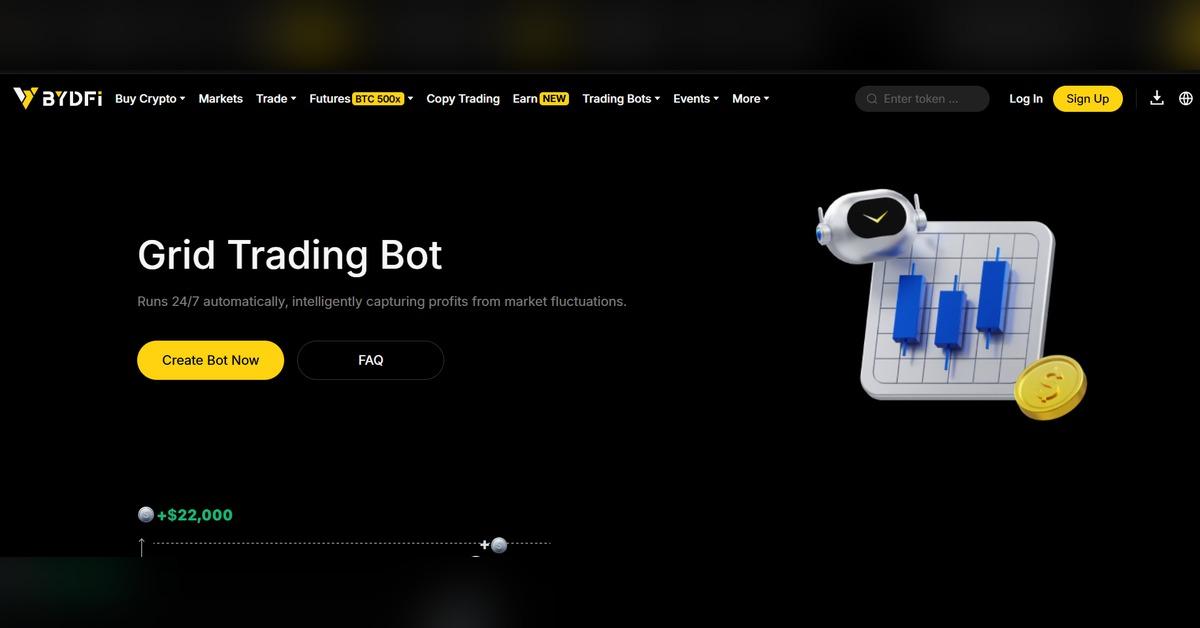
Spot Grid places orders across a configured price range. It is designed to trade repeated fluctuations within that range, leaving the user to choose the range, grid spacing and capital allocation. Profitable completed grid trades can coexist with an overall loss if the remaining assets fall in value.
Futures Grid applies grid trading to derivatives, adding margin and funding considerations. Copy Trading allows users to follow a selected lead trader’s activity and has separate profit-sharing terms. BYDFi’s guide lists a default profit-share ratio of 10%, but traders can apply to adjust it. Users should check the selected trader’s ratio and the applicable settlement rules alongside trading fees and the exposure taken by the strategy.
Account protection and service availability
Official documentation describes passkeys for login and withdrawal authorization through supported device authentication. These are useful account-access controls. They do not establish the exchange's financial condition or guarantee the availability of withdrawals during operational problems.
Funds held on a custodial exchange also involve counterparty risk. A public review can examine documented controls, but testing execution quality, withdrawal handling or support response requires separate evidence. Product access can vary by location, so eligibility for the intended service should be checked before funding an account.
Crypto exchange pros and cons for each audience
The clearest advantage is choice. New buyers can use spot orders or quoted conversions, while active traders can work with derivatives and automation. Published fee rates make basic transaction costs easier to estimate, and the different order types offer control over how a trade enters the market.
Funding and withdrawal options are also part of the decision. A buyer using a fiat payment provider needs to compare the final quote and payment charges, while a user moving crypto between wallets needs to check network compatibility and withdrawal costs.
The same range creates complexity. An occasional buyer may have little use for futures settings or grid parameters. Active traders must evaluate funding, margin and repeated execution costs. Automated strategies require monitoring, and following another trader leaves the follower exposed to that trader's decisions.
BYDFi is most relevant to users who want those choices and are willing to learn the rules of the products they select. Beginners can judge whether the purchase process makes the price, fees and resulting balance clear. Experienced traders can examine execution controls and costs against their usual position sizes and holding periods.