ECONOMY & WORK
MONEY 101
NEWS
PERSONAL FINANCE
NET WORTH
About Us Contact Us Privacy Policy Terms of Use DMCA Opt-out of personalized ads
© Copyright 2023 Market Realist. Market Realist is a registered trademark. All Rights Reserved. People may receive compensation for some links to products and services on this website. Offers may be subject to change without notice.
MARKETREALIST.COM / ECONOMY & WORK

New Fed report on Trump’s tariffs confirms what most economists warned about

94% of the burden of these tariffs fell on Americans between January and August, 92% in September and October, and 86% in November. 
PUBLISHED FEB 13, 2026
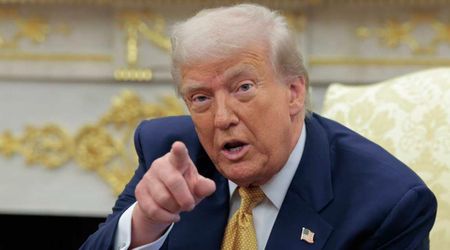
President Donald Trump (Cover Image Source: Getty Images| Photo by Chip Somodevilla)

President Donald Trump's tariffs were proposed as a way to collect high revenue on imports into the U.S. from exporters abroad. It was even suggested that the money collected through them could be distributed to Americans as a $2,000 payout. But as of now, the tariffs are significantly impacting American consumers, who are burdened by rising prices amid lower pay. Earlier, a German think tank's analysis revealed that American consumers pay 96 cents for every dollar collected in tariffs. While Trump claims that inflation has been defeated and the economy is booming, rising prices of essentials tell another story. This has been proved by a recent research by the Federal Reserve Bank of New York.  "Nearly 90% of the economic burden is borne by American businesses and consumers, with the average U.S. tariff on imports rising to 13% in 2025 from less than 3%," the study noted.
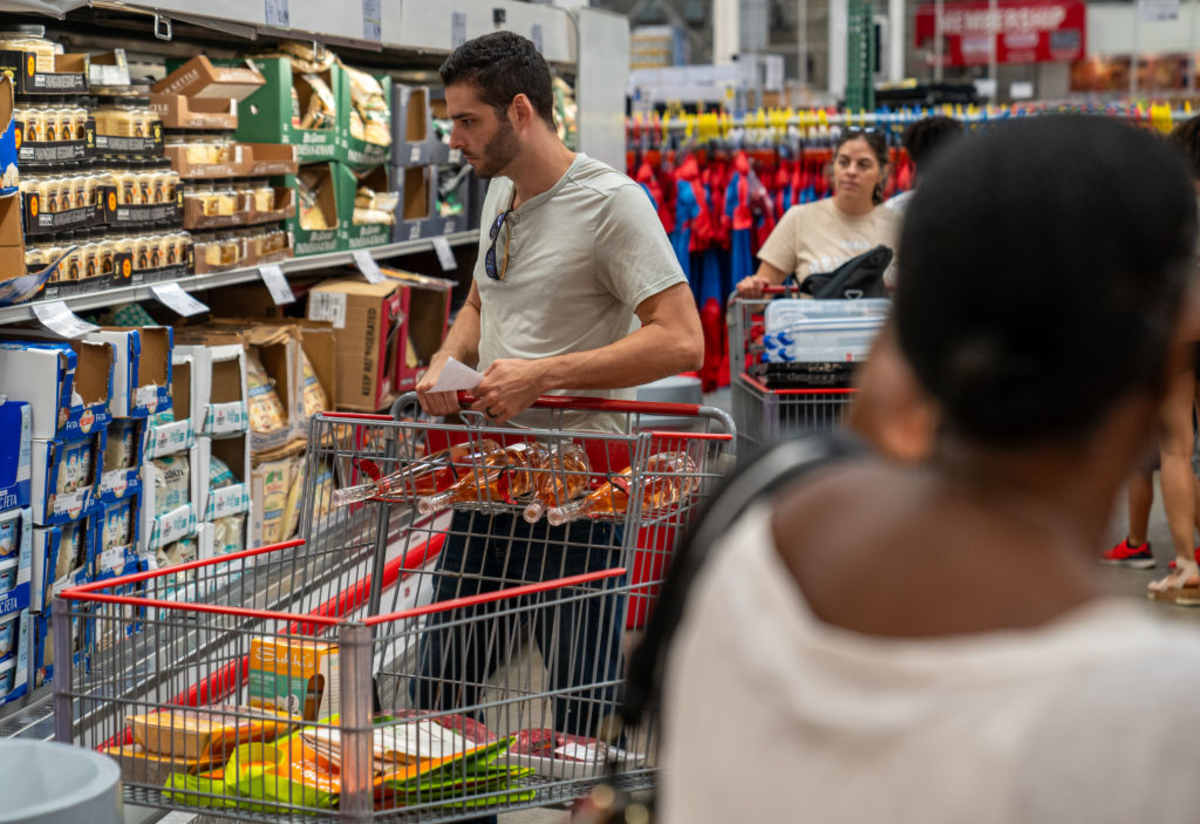
Customers look over food items displayed on August 16, 2024 at the Costco branch in Colchester, Vermont. (Photo by Robert Nickelsberg/Getty Images)
Customers look over food items displayed  (Image Source: Getty Images | Photo by Robert Nickelsberg)

The published report indicated that the average tariff rate began the year at 2.6%, surged by 125% points in April and May as a result of higher taxes on Chinese goods, and then decreased by 115% points in mid-May, ending the year at 13%. According to the analysis, tariffs placed during the first Trump administration caused a 100% pass-through into import prices, which prevented international exporters from lowering their prices. Around 94% of the burden of these tariffs fell on Americans between January and August, 92% in September and October, and 86% in November. 
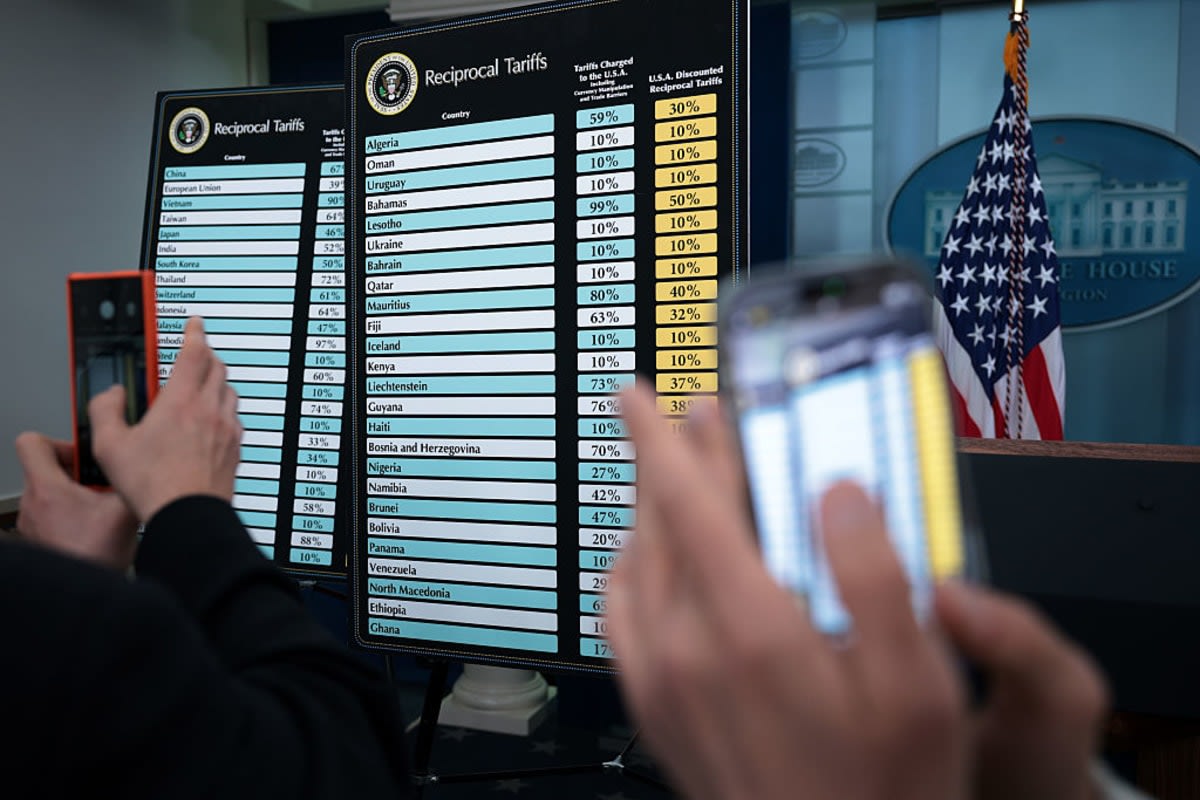
Charts showing the “reciprocal tariffs” the U.S. is charging other countries are on display at the James Brady Press Briefing Room of the White House on April 2, 2025 (Image source: Getty Images/Photo by Alex Wong)
Charts showing the “reciprocal tariffs” the U.S. is charging other countries (Image Source: Getty Images | Photo by Alex Wong)

It stated that, “higher tariffs directly increase the cost of imported goods, raising prices for U.S. consumers and businesses.” When it comes to who will pay the tariffs, the CBO said foreign exporters will absorb 5% of the cost, and in the near term, “U.S. businesses will absorb 30% of the import price increases by reducing their profit margins; the remaining 70% will be passed through to consumers by raising prices.” According to Trump's Wall Street Journal op-ed, foreign companies suffer the majority of the tariff costs. He asserted that in order to prevent larger losses, tariffs are mostly borne by foreign manufacturers and companies.
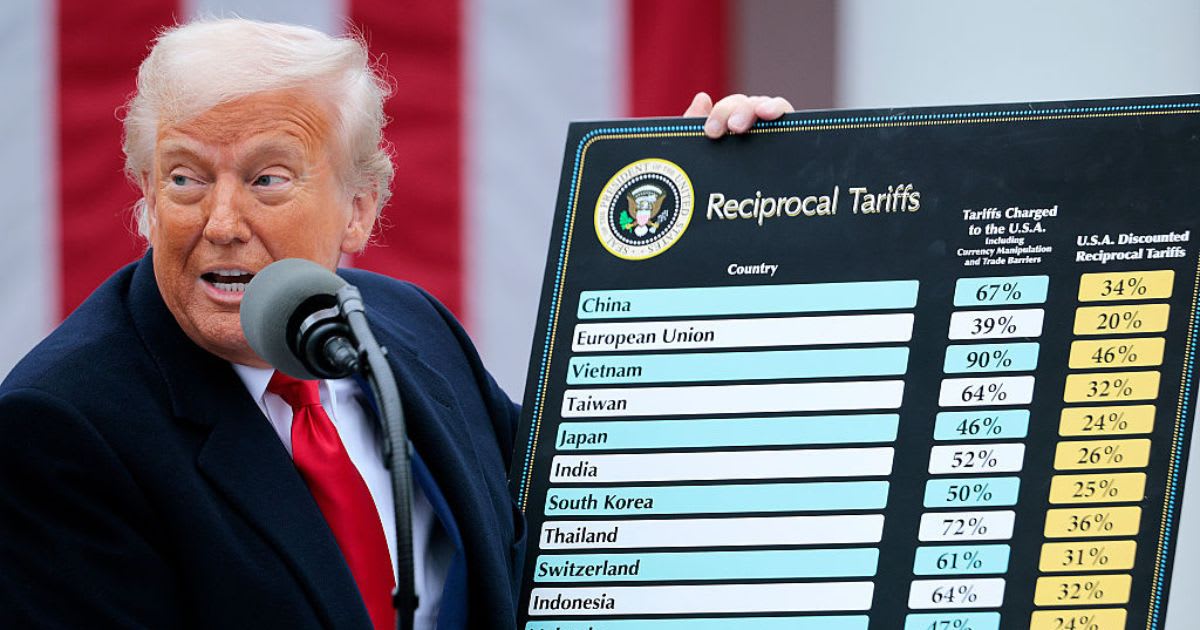
Representative Cover Image Source: Getty Images | Chip Somodevilla
President Donald Trump (Image Source: Getty Images | Photo by Chip Somodevilla) 

The New York Fed's results, however, contradict this, showing that from January to August, U.S. importers absorbed 94% of tariff costs. By November, this proportion remained at 86%, despite exporters bearing a greater portion of the burden, CBS News reported. “In sum, U.S. firms and consumers continue to bear the bulk of the economic burden of the high tariffs imposed in 2025,” the study revealed. Over the past year, companies have been adjusting to Trump's changing tariff policy. Many smaller-scale businesses quietly shut their doors or filed for bankruptcy. By negotiating supplier discounts and moving production to nations with lower tariffs, larger businesses have been able to minimize price increases for consumers while adjusting to higher import charges, The New York Times reported.
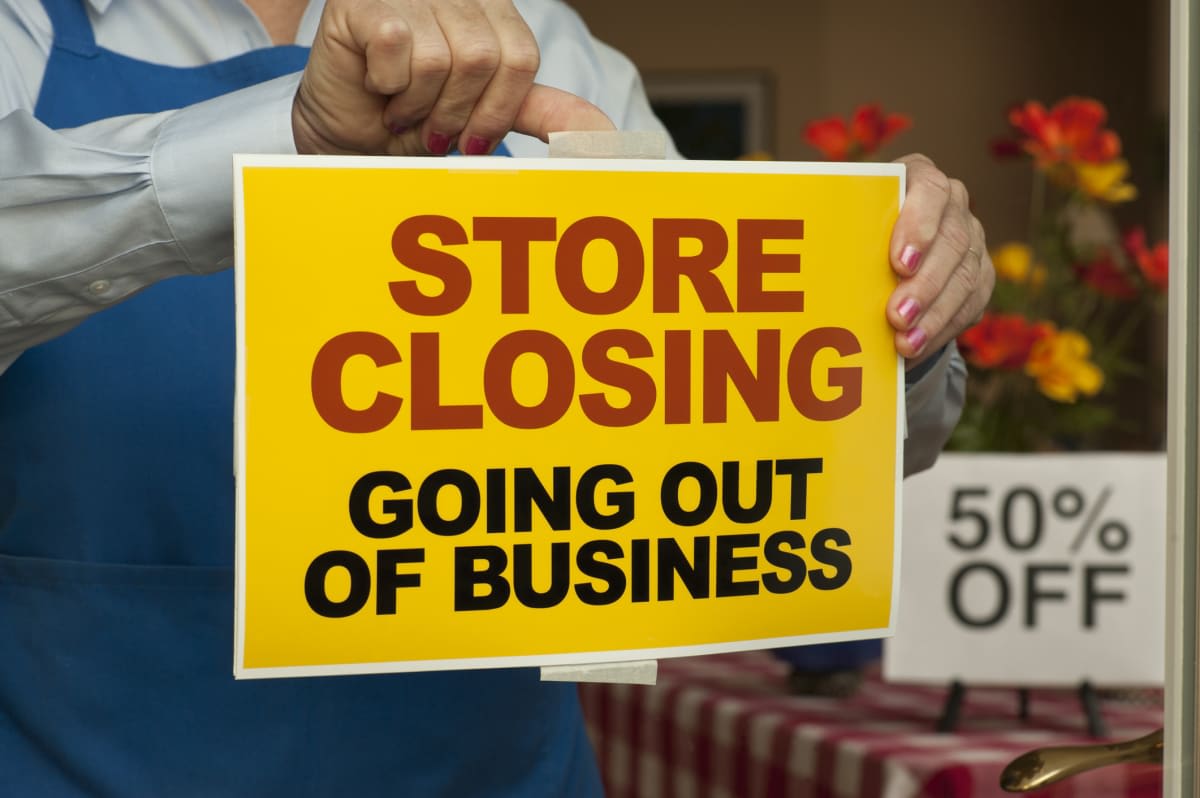
Representative Cover Image Source: Getty Images | KLH49
Business reporting shutdown (Image Source: Getty Images |Photo by KLH49)

Large import tariffs imposed by the Trump administration are intended to increase government revenue, penalize alleged economic exploitation by other countries, and support the home industry. But this tactic has led to unpredictable market movements, increased volatility, and economic ambiguity. 

More on Market Realist:

Trump's tariffs quietly forced 700 American companies to file for bankruptcy in 2025

Top economist warns US could be entering a 'jobs recession' — thanks to Trump's tariffs

Trump’s tariffs come under fire as state leaders claim they're headed toward an economic crisis

MORE ON MARKET REALIST
A Michigan couple’s viral membership photo struck a chord online as shoppers shared decades-old stories featuring their kids and even pets.
Mar 16, 2026
A shift to electronic payments is slowing refunds for some filers, even as the IRS grapples with staffing cuts and a heavy tax season workload.
Mar 16, 2026
The warehouse retailer is urging customers not to consume these ready-to-eat meals sold earlier this month
Mar 16, 2026
The product was distributed in several but no illness has yet been reported.
Mar 14, 2026
While most people disagreed with what the mall did, there were some who understood the reason.
Mar 14, 2026
People are seemingly having a hard time saving apart from their retirement funds.
Mar 14, 2026
“These people are working and contributing and helping to reduce the debt and deficit,” an economic expert said.
Mar 14, 2026
As per a provision in US laws, the IRS had no right to levy penalties in the pandemic years.
Mar 14, 2026
The US had sanctioned Russia heavily over its military exercise in Ukraine.
Mar 14, 2026
While gas prices have jumped, diesel prices have skyrocketed across the country, averaging at $4.78
Mar 13, 2026
Last year, Buffett stepped down as the CEO of Berkshire Hathaway.
Mar 13, 2026
Many who feel financially behind are embracing “financial nihilism,” placing bets on high-risk options instead of traditional investing.
Mar 13, 2026
It was one of the rarest instances in the show in which a contestant had won two cars in one episode
Mar 13, 2026
Housing search data flags a shift in buyer sentiment as Californians look beyond Las Vegas for cheaper housing.
Mar 13, 2026
The company is doing whatever it can to stay ahead of its competitors in the field of AI.
Mar 13, 2026
Industry leaders warn that the Iran conflict could push fertilizer costs higher and eventually drive food inflation.
Mar 13, 2026
This could lead to domestic migration of the wealthy from the state before the law takes effect
Mar 13, 2026
Karoline Leavitt says it won’t affect married women, but critics argue name-change documentation could create new barriers.
Mar 13, 2026
As regulators tighten rules and refineries shut down, the Golden State, also known as the ‘fuel island’, grapples with extremely high gas prices.
Mar 12, 2026
The answer isn't clear yet, but early signs point to his policy backfiring in a bad way.
Mar 12, 2026